

Eric Jackson on Building the Tractor Supply Brand From the Ground Up
Episode Summary
What does it take to build one brand for three decades? Eric Jackson shares the answer, straight from a career that started stocking shelves at 16 and just led to his promotion to VP of Marketing for Tractor Supply and PetSense. He talks through the evolution of the “Life Out Here” brand, how he builds trust with agency partners, and the one trait he looks for in every hire. This episode is built for marketers, founders, and brand leaders who want a real look at how a national retail brand stays authentic while it scales. Listeners will walk away with a clearer sense of what long-term brand loyalty actually requires.
Episode Highlights
00:00 – Episode intro and welcome to The Spark
01:56 – Eric’s start at Tractor Supply at 16, working alongside his grandfather
06:09 – The detour into advertising and landing at GS&F
10:15 – The Henry Ford quote that still guides how he operates
12:03 – Rebuilding Del’s Feed and Farm Supply from the ground up
15:21 – How the tagline evolved from “stuff you need out here” to “Life Out Here”
33:43 – The one trait Eric looks for above all else when hiring
35:45 – His advice to agencies: take small bites before the big swing
45:18 – Inside the Country Mile award and the culture it protects
Transcript
On Creative Assemblies: The Spark Podcast, our mission is to amplify Nashville’s diverse creative voices, foster growth through shared journeys, and inspire a city that thrives on collaboration.And now, here’s The Spark.Hello everyone, welcome back to The Spark.I’m your host, Mark Scrivner, and today is gonna be a very special episode.Today I’m joined with- by Eric Jackson.He was the former VP of, uh, creative for Tractor Supply, and now just newly promoted to VP of marketing for Tractor Supply and PetSense, and really excited to have you on the show, Eric, and thankful that, uh, you gave up your time to come up here- Sureand, and, uh, talk about your journey.So- Yeahthank you.Very, very newly, as in we’re, like, day 3.Day 3.Man, well, it happened over the weekend, and, uh, so man, it’s good that we can break the news on this show.Sure.Thank you for having me.Yeah, man.Looking forward to it.This is awesome.As I was doing research for the show, it’s, uh, interesting.You grew up in Franklin, Tennessee.Yep.You started your career- Rare.Very rare locallo- yeah, one of the, uh, one percenters- Yeahthat actually lived in- May- maybe dot-1 at this point.And you, um, you started at Tractor Supply when you were 16 years old.Stocking shelves, organizing things, probably anything they ask you to do, right?Pretty much.Yeah.And- And it was, it was just a fun environment.I, I told people so many times, it’s like I’m working with friends, so you don’t even feel like you’re working.The paycheck was a whole nother piece that was not even aYou didn’t even think about you’re there to get a paycheck.You were there to hang out with these people you just enjoy working with, and it sounds so cliche.I get it, but it was absolutely true.Uh, you went there, and when you clocked in, you didn’t feel like, “I have to be here.”You felt like, “This is- I wanna come work ’cause I’m working right alongside good friends.”Yeah.Did you know back then- And a grandfather.Oh, yeah?Did you know back then that, uh-that you were gonna be with the company for as long as you’ve been?It was not on my plan.So as a kid growing up on a farm, and I still today live on the farm I grew up w- Okaygrew up on.Uh, as a kid, I had an art background that was confusing, and I had a music background that was equally as confusing.And I was thinking, “Okay, I’m living on a farm.I know this life.I’ve seen all of those, like, way back”Do you remember there was these TV commercials for at the Marriott by the airport, the starving artist sale?Mm-hmm.And I remember this, you’d see on these commercials, here’s these really good-looking pieces of art, and I’m like, “Well, that looks great, and they can’t make a living doing that, so art can’t be a path.”So I wrote that off.It’s like, okay, drums.I’ve played them since I was 4.I love it.That’s what it’s gonna be.And all the way even through high school, I’m still, like, drummer, drummer.Into college, that’s when it started to change.I was like, you know, the way I was raised, growing up on a farm and having space and not being cooped up, I’m like, “I don’t know that I can be a drummer as a professional living on a bus touring.”Like, like none of that e- even remotely appeals to me.Mm-hmm.So I’m still sitting here with these 2 things that I’ve done all of my life that don’t seem to have a career path for any reason, and I had a great grandfather that was a civil engineer, and I was like, “Maybe that could be a path.”So pursued that.There was too much math to validate a, a design, and I was like, “All right, this is killing the whole creative side of me.I c- I can’t do it.”And so along the way of being a farm kid, well, Tractor Supply just made sense.You’re a 16-year-old.You need a job.Uh, I had a grandfather that worked at that same store.Mm-hmm.And if I could go hang out with him and get paid, sure, no-brainer.And so that’s kinda how I ended up at the store, but it was neverIt was just because it’s a background and a lifestyle I knew, and my grandfather was there, so it fit at the moment.But long term, I saw no path.Yeah.Once I got out of Tennessee Tech in an engineering program and I asked the advisor at 1 point, I was like, “Uh, this isn’t working.I, I just don’t love this, and I can tell 30 years of this does not sound appealing either.”And she’s like, “Well, maybe you should consider advertising, and there’s, like, creative problem-solving with that.You just don’t have the math equation.”Except for now I have budgets and all these other things.Mm-hmm.But at the moment, I was like, “Well, what do I do?”She’s like, “Well, you can’t stay here.You gotta leave and go to MTSU.That’s the closest program.”Mm-hmm.So I did, and it was round peg, round hole, and I’m like, “I’m on a path to go work at an ad agency” at that point.That’s all I thought about.Mm-hmm.Even through college, though, I still worked at the f- at the- OkayTractor Supply store, moved to the Murfreesboro location.And they’re like, “Oh, you should do the manager trainee program,” yada, yada.I was like, “No.I don’t want a key.When that alarm goes off, I’m not coming.”It’s like this, I’m on a path to go do ad agency.This is the lifestyle I live and know, but this is not the path that I see myself on.So it’s like there was, for whatever reason, the brand just kept bringing me back- Yeahand bringing me back and bringing me back.And got out of college, worked at GS&F right out of school.I did an internship there.They hired me to stay on, and it was really good learning by f- trial by fire.I mean- Mm-hmmyou’re right out of school, and I remember doing logos for Camping World, and I’m like, “Whoa, whoa, you’reWhy are you giving me to thegiving this to me?”Yeah.”I’m young.I, I don’t need to be touching this kind of stuff.”But you got over that pretty quick, and you’re like, “This is just what II did it in school.I can do it now.”Mm-hmm.And after a while, though, it’s like I still wasn’tThere was something missing, and a lot of it was the lifestyle connection and a little bit more of, like, connectivity with people versus it was a lot of solitary days and nights in your office just- Mm-hmmtooling away on this, that, and the other project.And so I was looking at what are the options in the area, and there was an opening at the store support center doing the exact same thing I was doing, and I was like, “Okay, I have to at least apply.”Still didn’t think I would go there ’cause I was applying to other agencies- Yeaharound Nashville, and 3 months later, there I was.And the head of marketing at that time even tried to talk me out of the job.He’s like, “You’re touching national client work at the agency, right?”I was like, “Yep, it’s fun stuff, cool stuff.”He’s like, “You’re gonna come over here and work on, no offense to these 2 departments, but, like, investor relations, audit reports, uh, end-of-year statements, HR policy, you name it.”He’s like- Yeah”This is w- this is the world you’re gonna get day one.Are you okay with that?”I was like, “Yeah, I’m good.let me make that choice,” ’cause it’s like if I do it well enough, long enough- Mm-hmmyou’ll probably give me something else to work on.And that’sI mean, that’s kind of what put it all in motion.Wow.Man, what a journey.Sorry if- sorry for the mouth- No, nofor the mouthful.That wasThat’s awesome.I don’t think many people would know that about you, and I think a lot of people would probably think you’ve been there the whole time, not knowing your stop- Yeahat GS&F and, you know, working on the things you did, which, you know, probably half of it didn’t, didn’t really inspire you that much ’cause it wasn’t a lifestyle brand.Mm-mm.It wasn’t a, a- It was just work.It was just a creative problem, and they’re trueI mean, it was Carrier air conditioners.It wasThere was a great one.There was Mini for Mini Pearl Cancer Foundation.That was inspiring.We had Tennessee Titans.We had just won the lottery when it came to Tennessee right before I left.So there wasWe had Bridgestone Firestone.There was fun stuff.Yeah.But it just, again, nothing I was super passionate about because I didn’t live into any of those brands the way- MmI naturally lived into the Tractor Supply brand.Yeah.I mean, even as a kid, before I worked there, I was going in and out of the stores playing while my parents or my grandmother was shopping for cattle supplies.We raised tobacco, all those things.That’s a hard, uh- Yeah.That’s hard.Uh, we wereI was happy when we stopped raising tobacco.Yeah.I bet.Well- The cow, the cows I miss.Going back to, um, you know, working in the store with your grandfather, was, was he harder on you than- Noother people, or was he n- was he easier on you?No.He, he was the, like,Way back then, he was the vergal, version of Google.So he basically just kinda posted up at the front of the store.Mm-hmm.And somebody came in with a problem, that’s where they stopped.It’s ask him, he will tell you where or how and what you need or that we don’t even have it.And you just kinda just stop right there.So he was, he was just fun to watch how he would interact, and I mean, you ultimately start kinda repeating and acting that way by default.You didn’t really think of it, but he wasHe w- he was a jokester.He was a prankster.So he liked to, to have his fun with people when they came in, and it was just entertaining to watch.Yeah.But I wouldn’t say he was not hard on me other than it was just the natural expectation of one statement, Henry Ford quote.It is in my office.It’s above where I park in the garage at home.It’s, “You can’t build a reputation on what you’re going to do.”Hmm.So if it comes out of your mouth, you follow through at whatever cost, whatever inconvenience.You said it, you do it, and you learn from that.That’s a great lesson.There is a, um, there’s a lot of, um, young college students that listen to this, as well as agency owners- Yepand other creatives around the, around the city, so I, uh- That’s a big oneI appreciate you sharing that, and, uh, great lesson.How about, like, you know, as somebody that’s aspiring to go in to work for a big company like Tractor Supply, and you got your chance to go in and prove yourself.Mm.Maybe talk a little bit about the trajectory of you moving up into where you’re at today.Well, it was lo- long hours, as you’re just gonna expect naturally ofIt was a probably a 10-year block of time that was, like, 6:00 to 6:00, and that was just normal.And it didn’t even feel like it was that difficult, or it didn’t feel like you had to.You knew you were there doing those long hours because you wanted to, and it was, “You give me a project, I’m gonna give it to you the way you asked for it, and if I have a strong opinion differently, I’m gonna show you, show it another way.”And yeah, that means it’s gonna take you a lot more time, and you have to really believe in it’s worth showing, or you just kinda let it go and you keep doing what you’re asked, and the trajectory’s probably very different- Mm-hmmwith that kind of approach.So the fact that I knew the lifestyle so well, I was always just kinda full of ideas of what ifs, and I was also willing to, in most cases, show what that what if could look like.So that was, that was the biggest part of the early long hours.Um, somewhere along the way, it was 3 or 4 years in, we acquired a company on the Pacific Northwest called Del’s Feed and Farm Supply.And the long hours and the headway I’d been making were starting to show up enough that they purchased that group, and they said, “Hey, you’re gonna go up there, and you’re gonna work on that brand, and you’re gonna just kinda be a one-man show.There’s no safety net from TSC, even though you get a paycheck from them.”There was 6 of us that moved over, and then we kinda just put all our time and energy into- Wowjust kinda getting that brand right-sided, on the straight and narrow again, running with some consistency and predictability.And we learned all kinds of things through the process ofThey did bulk propane.They did hay barns.They did things that Tractor Supply as a bigger brand learned from.We created one of our biggest exclusive brands for health- Hmmwith Del’s first, and we did it as 4Life.And it was just a couple of us that were putting these things together, and here’s name options.And we did do some clearances, but after we pushed it to TSC to test, well, here’s a conflict.There was a supplement company in Florida, and they were like, “Hey, we’ve got this, uh, registration.We’ll, we’ll let go of it for a pretty decent chunk of money.”And we’re like, “Pssh.No.We’ll just change our name.”Like, at that point, th- there was no equity in it anyway.It was still an experiment.Mm-hmm.But it was, again, a learning experience.It was fun.So long hours, a lot of travel, but you didn’t feel like you had to do it.Mm.You were empowered.People were giving you, “Hey, here’s your budget.Just go.”And it was, you’d research the new markets the stores were going in.You’d find the radio.You’d find the print.You’d book all that.Then you’d have to do the print.I say you, I mean me- Yeah’cause there was nowhere else, nobody else to do it.And so again, it was fun, ’cause you could move so fast.There was a lot of it, but you could just r- lightning pace through these things.Yeah.And so 6 of you moved from the corporate office here up to- Mm-hmm.We were still in the corporate office.Okay.But we would have, we would have to go out there a lot.Okay.So you did a lot of traveling.Many days, many days a month for quite a while.Yeah.Hmm.And you- It was a good time.Seattle- You know-Seattle’s not, not a place that you regret having to go.Yeah.Beautiful.Yeah.Support for the Spark comes from our sponsor, Snapshot.Building something that matters takes more than a good idea.It takes a brand people trust and a system that reaches the right people.Snapshot is a performance-driven marketing agency that helps businesses grow with strategy, creativity, and measurable results.To learn how to build scalable systems for sustainable growth, visit the link in our show notes.Well, you also led the creative behind, like, Life Out Here.The, uh, what was it, began as a brand tagline for people that aspire- Yeahto either move out of the cities or people that wanna live that rural lifestyle, and now it’s turned into something that was a brand tagline to now you’re pretty much known for that nationwide.Yeah, so m- many, a l- a little over 20 years ago, our tagline was, “The stuff you need out here.”And at that moment, we were still very small, still growing, and it was this really rural-based grouping of products of just stuff.And we weren’t really thinking about an overall lifestyle at that point.You were, I mean, I think our other tagline was, “We’re America’s farm and ranch Mm-hmmshop,” something like that.And so once we started evolving and the products and the categories started changing and people in the suburbs started finding us for pet food and backyard items and all these other things and It was all still coming from a rural inspired place that said, “Look, if you’re the type of person that just loves to get out in the backyard and do something with your hands”I mean, at some point everybody gets kinda tired of your existence being through an email, and you at the end of the day feel like, “What did I do?”Mm-hmm.But that’s when you go home and you find things to do, and that’s where our lifestyle and all of that kinda came together in this smaller 16,000 square foot retail box, where it made sense to have this curated assortment.And when we started realizing if you’re having to do a curation, there is an experience and a lifestyle piece to it.If it’s just about the stuff, well, other bigger brands of big boxes, that is where it’s about the stuff and the price.Like, we care about the price, but we really care about it has to make sense in that box for a lifestyle.And so that was the natural transition to instead of the stuff you need out here, for life out here.Mm-hmm.Yeah.What do, what have you found over the years the hardest thing about, like, protecting and keeping that brand message authentic?As, like, I know Tractor Supply every year, your audience base, your customer base, like, uh- Changesbroadens big time.Yeah, it changes a lot.And you’re serving a lot of people, the recreational farmer to the- Yeahuh, the true farmer, to the person that just wants to have chickens in their backyard.Yeah, I mean, the chicken craze, that’s, that’s the head-scratcher of how big that has gotten.Um, but if you look 10 years back, we’ve tried selling grills in the past.Didn’t work.Now it’s one of the top selling areas.And it’s just interesting to see categories that you tried way back that didn’t work then, doesn’t mean they’re permanently gone, it’s just they were the wrong moment in time.And now all of those kind of backyard lifestyle based things, grill pellets, one of the biggest sellers.We’re getting tons and tons of energy and new customer finding those things.So it’s just interesting to see the landscape and what the customer wants and when they want it, that changes enough that it really kind of forces the evolution from within.Um, yeah, the customer, the segments, how you slice and dice the groups, all that does continue to evolve.And when someone starts at one end of the country dabbler, which is just someone that’s shopping a couple times here and there, they naturally, they get in there, they find something that’s, “Hey, this is an activity I really love.”Well, when you start to get good at something, what do you wanna do?More of it.Mm-hmm.And you just kinda keep evolving and evolving to the point where, hey, this one acre backyard’s just not big enough to do what I want, and I need 5 acres, and so on.Yeah.Especially when you go into the stores, they’re so welcoming, and I’ve always had amazing experiences in there with people that are really well-trained- Mm-hmmin, uh, whatever area they’re servicing.And the, uhAnd you know, just, just thinking about, I don’t know that anybody understands how much work goes into rolling out one of those, like, 4health, um, you know, brands, or whatever you guys undertake, knowing the amount of stores that you have to go out and communicate that in.How do you, how do you roll out things like that andJust down and dirty brute force.I mean, there, there’s no easy way to doIf you think the stores, they’re soThere’s, at the end of the year, we will be creeping towards 2,500.And many of those are different.So the boxes are very case by case.You moved into a past retailer here, you moved into a new build over there, and there’s not a lot of same same, which makes just putting signage in a store- Mm-hmma really difficult and highly versioned challenge that the bigger boxes, like a Home Depot and Lo- they don’t have that challenge.One size pretty well fits all in most cases for them, where for us, there may be 15 versions of something to accommodate different ceiling types, different s- different ceiling heights.Mm-hmm.Uh, one thing that works in the Northwest has no place in the Southwest.So I’ve always said we’re really, really tricky and difficult because of the just specificity by region and then by store type, and then now all of the digital that’s starting to really complement.You get a ton of people that they go online, they buy something, then they pick it up at the store more times than not.That’s the preference.And so it’s, it’s just a constantly evolving landscape of how you can launch, where you can launch, where the attention and the eyeballs are going first, and then the infinite journeys of how they find the different things based off all of the segments.Yeah.So it’s, it’s launches are tricky.Well, you, uh, you grew up in Franklin.Mm-hmm.You’ve, uh, been very active on the Friends of the Franklin Parks board, and I know you’ve, um, raised lots of money along the way for them and the organization.And, um, you know, you, the brand wants people to move to- Mm-hmmthese smaller communities.Or not necessarily wants them to, but you give them that lifestyle, right?Pe- people wanna do that on their own.Yeah, people, people wanna go.But, but I mean, Franklin’s one of those cities that it’s like, man, you’ve g- had a lot of people move in.How do you maintain the character?And I guess like, you know, do you ever see this with other cities?Like, what advice would you give as, as people do start to move out of the big cities and move into these rural communities?So I mentioned the Henry Ford statement I park under.There’s a, the, another bay in the garage.The statement above it is, “Buy land, they’ve stopped making it,” Mark Twain.So again, to have the lifestyles and live these unique ways, it takes space, and you don’t realize what you miss when you don’t have it.But when you are confined, you just start to forget how good it feels to sweat, to be dirty, to do something for yourself that you didn’t think you could do.I, we started, my wife and I started with bees 2 years ago.Hmm.And boy, that is a difficult task.Is it?It is a lot of learning curve there.Mm-hmm.And you have to stomach a lot of failure and things you can’t control, but you feel like you wish you could, but it’s, it’s science and nature, and you just at some point can’t influence it all the way you wish.Um, but these cities like Franklin that were once really pretty rural, and they’re now becoming very, very suburban, still avoiding the urban part because most of that historic control stops that, thankfully.But when you think of those cities, I mean, that’s what’s moving our store locations and our store relevance around to where we may have been in one part of town for decades, and then all of the new growth moved the side of town completely and you now have to look at relocations.Hmm.So we get into many, many store cities and areas where you’re almost having to really keep revisiting the relocation plans- Yeah.Hmmjust from the way the growth is happening.Man, I’m glad you, um, mentioned that about the bees, ’cause my wife and I, we went and took a beekeeping certification class- Yeahand, uh, we were- My wife did as wellwe were gonna, uh, get a b- couple beehives.So, uh, it’s good to hear.We’ll have to share some stories after- Yeahuh, the episode.But, you know, I guess, like, looking at Franklin, what do you think Franklin has gained and maybe what has it lost since the time you were out there stocking shelves?I, it’s, it’s a delicate balance.So to have a city that can stay thriving and growing and being preserved, it takes the influx of the new people, the added taxes, the added growth, the boom, the business.It takes the balancing of the both to make it all work, and it’s, it’s sometimes hard to watch that because you feel like there’s too much growth.Mm-hmm.But then you realize if you didn’t have it, the revenue wouldn’t be there to maintain and preserve it at the same time.So if you look at the really rural parts of America, you can see the towns where, okay, when the influx stops and it’s just everybody going out and moving and shifting the communities, that’s when you see a really cool historic downtown area start to unwind.And it’s sad to see.When we go out filming, we run into a lot of really super small towns and, you know, you don’t like to witness that.Mm-hmm.But thankfully Franklin has a really good balance and a really good inflow and outflow, and that’s where Friends of Franklin Parks, we do a lot of justOur main focus is green space.Just making sure, hey, the development’s gonna keep happening, but there’s special places like the couple hundred acres of Harlindale- Mm-hmmthat you’ve gotta protect.And it’s almost got this Central Park vibe or Boston Common-type vibe being right up against the city.And on the weekends and when the weather is nice, you just look out, and the park’s full of people just enjoying space.Yeah.And that’s, that is life out here.Hmm.Well, you, um, you know, you mentioned the number of Tractor Supply stores there are nationwide, but also you manage and oversee, like, the, uh, Petsense brand too.And so between the 2 it’s, there’s what?2,600 plus, like, stores over there.And I guess, whatHow do you balance that with both brands?Well, they’re, they’re meant to be complementary.So they both serve very different customers that you then try to bring those customer audiences back together to realize, hey, look, the benefit of one, you’ve got that almost little bit of yin yang of one is stronger with, hey, these people that may never find their way to a Tractor Supply, but once they realize, oh, there’sour rewards program works at both, you have the opportunity to show them something they most likely are already buying something else, and they never would’ve considered b- buying that at your store without that first exposure from somewhere like PetSense.Conversely, when you shop at Tractor and you have a little high-maintenance dog like April and I do, of a 15-pound dog named Banjo that needs grooming.Well, we may not wanna go use a pet wash all the time, and you wanna get it groomed, and that’s where PetSense has those- Mm-hmmservices different than a Tractor.So they’re very complementary.Yeah.You’veThat’s interesting.You’ve had, um, you’ve had so many wins along the way.It’s got you where you’re at today, but I’m sure there’s been equal amount of, like, maybe some misses that you’ve had.Is there any that, like, stand out that you learn from, and how- Well, but you have so many projects throughout a year, by the time you get to the end of one, you’re already thinking of the 10, 15 things that are already down a path so far you can’t put them back in the barn.Mm-hmm.And you keep applying that forward.So we had a previous CEO, Jim Wright, long ago, fail fast, often and cheap.So you try to make sure it’s all of those little bitty failures along the way and those quick course corrects, so you can avoid the big ones.Mm-hmm.And so that’s, we still kind of operate that way today.It’s always better, better.What are the small things you can do to keep making things better?’Cause if you try to over-perfect in the fast moving retail environment, you generally are gonna get missed.Yeah.And I mean, look at everything since COVID, how fast things changed, so.But that’s what keeps the daily life so interesting.I mean, you areIf you’re bored at Tractor, not doing something right.Mm-hmm.’Cause it is a constant state of evolution, but that’s why it’s just, it’s always inter- you’re never finished.Yeah.You mentioned, uh, Jim, Jim Wright.Mm-hmm.And you’ve had some amazing, like, CEOs over the years that- Yeahall different personalities, all different styles.Like- Pretty rarehow is, um, I mean, how has it been to, like, have to shift between each style that maybe you’ve experienced?go back to when I was 16 and Joe Scarlett- Mm-hmmhe was CEO at that time.And I can tell you, as a 16-year-old, I watched him come in one day, and he wanted me to tie a Christmas tree to the roof of his new car, and I was like, “I can’t do that.I’m gonna scratch the roof.””Oh, it’ll be fine.Just do it.”I went and did it, happy he left, and no issue.But it’s like that moment, never have forgotten, of just his style of he was there to check on the store.He was not worried about scratches.I was a nervous wreck about that, but not a detail he cared about.He was one that also said, “You’re always on stage.”And he preached that all the way till he retired and went out to do his speaking engagements.So you’ve got Joe Scarlett, you got Jim Wright, you got Greg Sanford, and then Hal Lawton, and all of them complete different styles.And I would say every one of them, while very different personality and style, fit the moment we were in like a puzzle- Mmlike just the most perfect puzzle piece.Yeah.So the amount of things you learn from just watching their interactions and how right, you don’t realize how right they are in the moment till the moment passage you, it passes and you look back in reflection and you’re like, “Okay, Jim Wright, very methodical, very focused, very driven, very numbers focused,” and he got us through that recession period of 2008.And you come out of that and you’re ready to boom, and you need some more focus around merchandising and just getting the simple retail details really, really right, and that was Greg’s sweet spot.Mm-hmm.And the appreciation he had of, um, customer service, servant leadership.And I can remember for a full year at the Triune store, we basically ripped every aisle apart at 7:00 AM on Tuesday, and if you were at 7:01, you’re locked out.It’s like little details like that.Mm-hmm.And you just, you, you, you struggle through ’em when you’re in it.High standards, though.You look back though and appreciate that way, and you don’t even realize you continue to operate that way- Hmmalmost unconsciously from it.And then when Hal joined, I mean, it’s COVID, and I mean, the whole world went upside down, and the way we worked went with it.But what was crazy is a year probably before COVID hit, we were already experimenting with work, work from home systems, technologies to where when you’re out sick, you can keep some continuity.Mm-hmm.And none of that was, none of the COVID thing was on the radar, and even when you went home, you’re like, “Eh, it’s a couple weeks.”I mean, I sat at the kitchen table for 2 or 3 weeks thinking, “Eh, it’ll, it’ll pass.It’ll pass.”Mm-hmm.And then year later I’m still sitting there thinking, “Eh, it’s probably close.”Wrong.But we were already always kind of a little bit of ahead of things unknowingly, that when the moment hit, you were ready or you were pretty close.So when all of that world flipped and went from a heavy print focus to really just double down on everything digital, it really was not that big of a- Hmmdifficulty for us to work through.We were kind of primed and ready, and we just had to throw some gas and go.And he was perfect for that moment ’cause he was comfortable going really fast.Mm-hmm.And we did.And we started on to TV commercials, where any given year we might do 2 or 3, we did like 12 ’cause the media was cheap.It had been abandoned by a lot of people.Mm-hmm.And we figured out, “Hey, we can turn and burn.”We’re sitting on a huge library of footage, and we just kept turning and burning through ’em.You’d finish- Wow1, the first one we, heThe ask came in, “Can we do it in 72 hours?”And we did it.Hmm.To finish that one, he’s like, “Go again.”Finish that one.”Go again.”Yeah.’Cause month by month the messaging and the tone kinda kept changing as the world went through all of that.Yeah.Well, man.It was, it wasYou look back now and it was a horrible time, but you appreciate what you learned of what you can really do in those kind of moments.Mm-hmm.Things that you would’veIf I came to you, “Hey, let’s do a video project in 72 hours,” you’re gonna hang the phone up.Hmm.But n- that one was like, yeah, you’re gonna figure it out ’cause that is truly what the ask is, and you just solve your way through it.Now, Eric, if you called and you said 72 hours-I mean, we’d think about it, but, uh We’d think about it, but you’d still be like,That’s funny.Well, just staying on the people part of it.Like, you’ve managed so many people over the years.I can’t imagine how many have came in and out and worked under you.Like, is there a common trait that you see that, that is something that somebody has that’ll make ’em successful for you?Curiosity.You’ve gotta have a curio- a curious mind to be able to get an ask and think beyond what you’re just directly being told or asked to do.So you’ve gotta have just a bit of a natural curiosity to look at what was asked and saying- Mm-hmmand start to think, “What else?”So curiosity helps.You gotta be really be driven.Our re- our world is so fast, if you’re not driven, you’re just gonna, you’re gonna struggle with the pace.Mm-hmm.And thankfully I have a short attention span, so the pace works well for me, and there’s plenty of days I would love to go slower, but I just, IYou know that’s never gonna be the option.Mm-hmm.And if you wanna go slower, you’re gonna have to go somewhereSo curious mind, very driven.At the end of the day though, personality wise, it takes a lot of different personalities to make the team actually really kinda bond and gel and work well.If they’re all the same, then that, that’s not the best environment.Yeah.And sometimes the most talent doesn’t mean the best fit for the team when it is small teams having to do very high-stress things and moving really quick.You look at, “Okay, I do need to understand how do they fit within this little small family?”So it, it is fun though, ’cause all the personalities, youThe next time you hire somebody new, you, it’s fun to watch how it shifts the dynamic of the group- Yeahand what they add to that little unit.Well, since we, um, speak to a lot of agency owners as well, um, with the podcast, you know, I’m sure they’re curious- Yeahof like, what are, you know, what do you look for in your, like, agency relationships?What are some of the better ones you’ve had?Maybe what are some of the times you feel like, “Hey, this isn’t working out”?So with agencies and our pace and our lifestyle, which the pace and the lifestyle are the 2 really difficult pieces to grasp quickly.So I prefer working small.Take small bites with an agency partner, get some quick wins, just get a good sense of how you work together back and forth- Mm-hmmbefore you then ratchet up to something much bigger like a full-blown TV spot type production.That’s the most chaos you can throw at anybody.And sometimes there is a inflexibility reaction with agencies that they want the big thing first, and I have to tell ’em, it’s like, “I’ve seen time and time again when I do this-” Mm-hmmit’s a one and done Like we won’t continue this, ’cause it’s gonnaYou’re gonna fall into traps where you don’t understand the pace, you don’t understand some of the internal dynamics.You’re gonna, you’re not gonna understand the audience we’re trying to speak to and why, and it just can be too much too soon.We also don’t have the time to sit with a creative strategist and go through months and months of that to get them up to speed.We’ve done that process before.We’ve tried it.It just takes too long for where we have to be really, really quick seasonally.Mm-hmm.So there’s those pieces that are really critical of just trust when we wanna go small bite first, it’s in the best interest ofI was in an agency thankfully just enough to see the chaos that can ensue when you go too much too quick.Mm-hmm.And being just a creative in general, I understand it takes a while to understand us well.And then there’s, because we’re a farmy kind of brand, it’s easy for the initial creative passes to be stereotypical farmy cliches, Southern cliches.I think I’ve told more agencies, “We’re not a Southern company.”Mm-hmm.”We were founded in Chicago.We’re a national company.”So you have to understand there is this 4 corner dynamic of north, south, east, west that you have to kind of factor for, ’cause it is a very even split where all the business comes from and what customers in those areas care for and don’t care for.And it’s, it’s just a lot to absorb- Mm-hmmand then push out in one campaign.Yeah.At a quick clip.Man, I, I do remember, umI mean, you’re very good at walking an agency through that and telling them that story of don’t take on too much too quick.And, uh, it’s a great less- I mean, it’s a great lesson for agencies, ’cause I’m sureI mean, and it sounds as though you probably manage multiple specialized agencies- Yeahand not necessarily, we have this, you know, big global agency that’s managing- Righteverything for us.Yeah.I look for compilation of everybody that has a, you’re really good at just production.You’re really good at just writing and concepting.You guys may really be more graphically.So I mean, there’s a group in Memphis I just started working with that’s, store signage is kind of a sweet spot for them.Mm-hmm.I worked with them a long time ago, and it’s like, mm, it’s time to come knocking again, ’cause with this new role, it’s stuff that I probably would’ve taken and I just, I can’t do it myself now.Mm-hmm.Just don’t have the time.And so I told them the same thing.I said, “These are gonna seem like small things.One of them is a mural for one single store.”But I was like, “It’s a historic mural in the 2500th store, also in the hometown of Jim Wright, one of the past CEOs.”Mm.So it, yes, seems small, but it has big implications, because we also have lots of stores that need murals.Yeah.So all these little small bites do have much bigger connectivity behind them.So they come in, prove themselves with that one mural, and they’re gonna have many, many- It could, it could open up 50 plus.Yeah.Hmm.So ’cause again, we open up into s- like old grocery stores, and all these different formats have these different phantom walls you don’t know about until you start opening the grand, the grand opening hits, and you’re like, “Hmm, this is a really empty spot right here that just feels awkward.”Yeah.There’s nothing that’s welcoming the customer.It’s just this big blank wall before you get in the store.Yeah.So.Well, you’ve worked with an agency partner for let’s just say 4, 5, 6 years, and all of a sudden it’s not working anymore.What, what is that in your mind?Like, what doesn’t work?It’s either we’ve started to pick up more speed and there’s just a, a struggle to match speeds, or it’s agency attrition sometimes.It’s like the people that you started with may not still be the ones that are there.Mm.And that starts to disrupt the dynamic.Um, the other p- I mean, pricing.Budgets, our budgets are razor thin, and I mean, we will make you sweat to try to get it.Mm-hmm.And it’s, we would love it to be healthier budgets that you’re working with, but it’s just, it’s a publicly traded company, so you have to think of every dollar spent is another dollar that the store has to offset with sales.Mm-hmm.And then you gotta look at the project itself and what’s the potential for an ROI when you put it through that heavy lens, and sometimes that’ll fight creative pretty hard and it’s, it’s a tough balance to work through.Yeah.So it’s, there’s a lot of things that can influence what works for longevity and, uh, what means a fairly quick stop-start.Yeah.Hmm.Well, you give, you give so much back to the, uh, you know, to the communities that you serve, like through, you know, Tractor Supply Company Foundation- Mm-hmmthat you sit on the board of.The, like we said, the Friends of, uh, Franklin Parks.But you also, you know, you’re a part of Make-A-Wish foundation and Cultivate.You know, what, what pulls you back into giving back?It’s just the, the basics of life out here, which is you just look at your neighbor and you just wanna help.If they ask, you just feel, it’s not an obligation, you just, it’s, you wanna do something.And when you get an ask from, when Make-A-Wish came and said, we weren’t even, at the point they first sent me an email, we didn’t even have the TS- TSL, TSC Foundation at that time.And it was a little boy in Sparta, Tennessee that wanted- Mm-hmmto do this, like, tooled out woodworking garage in his basement ’cause he was so sick he couldn’t go to his grandfather’s anymore and continue projects.When the letter got to me, there was nothing about anything for himself.It was, “I want this, I wanna be able to build stuff for my grandfather, I wanna build a birdhouse for my mom, I wanna do all these things for someone else.”There was no toys.He was, like, 9 or 10.No toys mentioned.So when you see something like that, you’re like, you want to roll the red carpet out and just blow this family away and give them that experience that, hey, you, someone reached out on behalf of you to a very large company.You don’t, you never wanna be in the situation where that family feels like we are not important enough to warrant the time of this big organization.We wanna always feel like we’re still that one-to-one, you ask, we will find a way to help.And same with Cultivate.When they were getting started, I got an email from Joey, the executive director.He and I went to high school together.We were in French class together.And I got an email of what he was needing, which was tillers and some basic power equipment.Coincidentally, at that same time, the manufacturer had a, like, studio down in Cool Springs where they were holding older models.They weren’t using them.I sent an email, I said, “Hey, what are y’all doing with those?”And they’re like, “They’re just kinda hanging around.what do you need?”It’s like, “All of them, to go to this farm that they’re starting.”They were happy to get them out of their way.So I mean, if anything, you’re just making connections.It’s not costing- Hmma ton of money.It’s a little bit of your time, and it’s those things that just, that’s what makes you feel good about the lifestyle.You want that to be the essence of what keeps the lifestyleYeah.I mean, that’s, that’s like the spirit of Dolly Parton as well.Mm-hmm.You just give unconditionally when the ask shows up, and you try to make that person with that ask feel as special as possible.Mm-hmm.And that they were worth your time.Man, I appreciate you saying that about Dolly, who just passed away.Yeah.Um, and I’ve told a few people already, like, there was one person I wanted to meet in my life.It was Dolly, and I never got a chance to, but I just loved how much she gave back and how entrepreneurial she was- Mm-hmmand how successful, but how, like, kind and giving- Yeahshe was.I mean, everybody that’s ever met her, you know?Yeah, you were never a bur- Anybody that got to her to ask anything was never at a burden.Mm-hmm.And that’s what you want.That’s how you want a company to react.That’s how you want your neighbor and your family and your friends to always react.When you need, you don’t wanna be a burden.You just want them to say, “Yeah, absolutely.”Yeah.What are you the most excited about the f- next few years at Tractor Supply?We are still a very unknown brand, in my opinion.And for the amount of special things we do at every store, you, we have, it’s called a Country Mile award.Mm-hmm.And anyone on anyth- any given day can hear a story and give a badge or an award to someone that did something just outlandishly special.And it’s stories you can’t operationalize and talk about publicly, ’cause they are just doing over and above what you would have ever expected them to do.But that is the DNA of every store and all these communities, and so when you keep hearing all of that, you know the brand is just absolutely at its most healthy state and it’s thriving and it’s growing, and if you can keep that being replicated, even though it’s kind of a, a secret thing- You, that’s what you get the most inspiration to do everything you can to make sure they can keep doing those things.Mm-hmm.Because when you read these stories, I mean, you’re just like goosebumps.Oof.And you wish you could talk about it, but you can’t, and if it was talked about, it would completely tarnish the integrity of how it was done.And in many cases, none of those people that did it want any exposure from it.It was just, they felt great doing it, and they appreciated they were empowered to do it.They didn’t have to go check.They just, in the moment, acted, and that’s when it means the most.If you had to go, “Oh, let me send an email.Let me call someone, see if I can do”No, just do it.Hmm.That’s when it makes the biggest impact.Yeah.Man.Well, after 3 decades from stocking the shelves to-VP of marketing, um, you know, what, what do you think a encore looks like for Eric Jackson?Oh, I’m far from done.The, like I said, the, the brand is far from done, and I can’t even really put the next picture together ’cause the current picture is 3 days in.Uh, but it’s an exciting world to know it all is running back downhill to customers that are gonna keep finding they’re more capable than they probably think.I mean, the, all these new people that have found chickens.Chickens are a lot of work.Mm-hmm.But people continue to figure out, you know what?It feels really good to know that egg and that skillet came from right back there.Mm-hmm.And I don’t know that that’ll ever get old.Well, Eric, as we, like, wrap up the episode, maybe, maybe just share what is, what is the most exciting thing about your job?Like, what keeps you waking up every day and passionate about this?Earlier, I think you’ve heard me say a couple times, I have a really short attention span, and the most exciting part of my job is the next day could bring a complete different project you never expected, and I love that level of unknown and variety.Like, I c- I don’t do well with repetition.I get really bored really quick.Hmm.Like if my wife’s like, “Oh, let’s change the color of the, the living room, and we’re gonna paint it,” I’m like, “Uh, absolutely not.”It is just repetition.I can’t do it.Mm-hmm.Mowing the yard, it’s repetition.I can’t.And so I love the variety, the variability, the unknowns, the next email the CEO sends of some project, like, “Hey, we wanna do a special piece in the back courtyard to honor the CEO that pinned our mission and values.”Okay, I’ve never done anything of similar sort, but it’s fun to go through the process to figure that out, and to look back and think, when I was in college, never would I have expected to create and design a little monument.But it was really fun to do, and it was really difficult.I found out artists that do sculpting and bronze and all those things- Hmmthey don’t care about your retail schedule.They don’t care about your timing and events.They have their pace.They work it, and if you don’t like it, you have to find another source, and I had to find 3.It took to the third try to get somebody that could somewhat keep us moving to meet an event timing for a spring reveal.I was like, so it’s, it’s those kind of things.Mm-hmm.You never have time to do it, and that’s probably another lesson.If you ever think about do you really have time for certain things, well, you, you have to find a way to expand and make time when those asks come in, ’cause they’re gonna be meaningful.You’re never gonna look back and regret it when it’s done, uh, but it’s gonna be really hard to absorb.Yeah.But it will absolutely be some of the most fun things to look back on.Well, thanks for sharing everything you’ve shared today.I mean, some great lessons, and appreciate you talking about, like, what you look for in your agency partnerships and just, um, the way you live your life and the passion you have behind this brand.It’s very inspiring, and you know, it would, it would, um, you know, I’d hate to l- leave the episode without saying I’ve talked to many agency owners that have worked with you over the years, and- Oh, GodWell, to hear the amount of, uh, agencies that have been successful because of the work you’ve allowed them to do with you, uh, is pretty inspiring, too.You should, you know, you should know that.And, uh, I’m sure you may not hear it all the time.Uh- Well, and we also lost, this year, Roland Gibbons from GS&F.Yeah.And, uh, definitely when I was hired, he was the one that made the call to hire me.I just remember going in his office, it was a big office, and looking around, and you were just, like, in bewilderment of the talent that he had.And you’re like, “Wow.”If there was someone to emulate, he was very quiet, and I’m certainly not quiet.But there was plenty of things I could learn of maybe I should be a little more quiet.Maybe sh- I should be a little more thoughtful like he was, because the creativity was just so amazing.Yeah.And so that, that was very sad to see- Mmthat earlier this year.Yeah, I appreciate you calling that out.We had Scott on the show from GS&F, too, and he, uh, he, you know, mentioned the same thing.Roland hired him, uh, on the spot.So, you know, I know he’s impacted a lot of people over the years.So thanks for saying that.And thanks again for being on the show.Thank you for having me.And thanks for everything you do, man.Thank you all for joining us again.I know, uh, Eric’s story’s, uh, gonna inspire a lot of you and, and hopefully we’ll drop his, um, information in the show notes, and if you have any questions for him, please reach out or drop them in the show comments, and I’ll get them over to him.But if you would just subscribe, rate, and review, just so we can get this message out to more people that need to hear it.Um, until next week, we’ll see you on The Spark.That’s a wrap on this episode of The Spark from Creative Assembly.Thanks for spending time with us and exploring the minds shaping Nashville’s creative future.If you’re walking away more inspired, connected, or energized, that’s exactly the point.A big thank you to our sponsor, Snapshot, and the incredible team behind the scenes who make this show possible.Your support fuels every conversation and keeps collaboration alive.So if you haven’t already, subscribe wherever you get your podcasts and leave us a review.Thanks again for tuning in.Until next time, stay creative, stay curious, and keep that spark.
Watch, Listen, and Subscribe



Listen to More Episodes
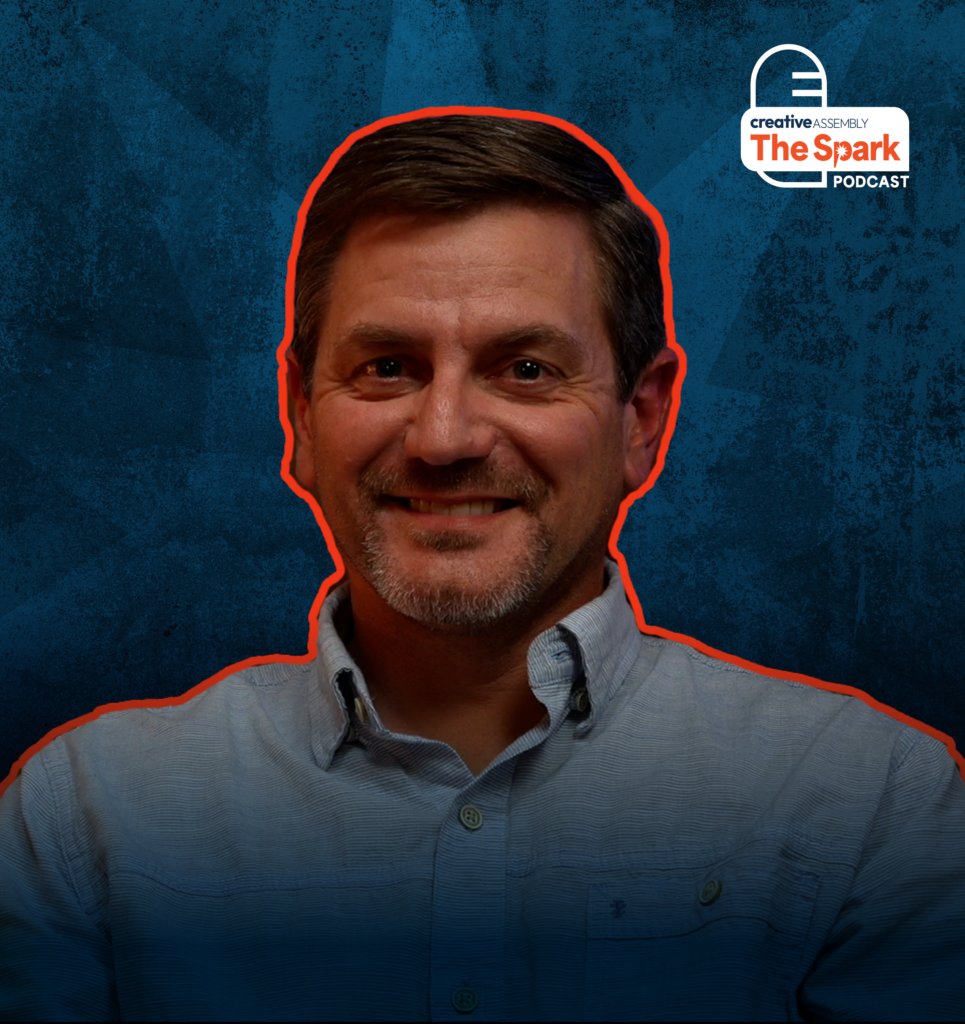
Meet Our Guests
Never Miss an Episode. Subscribe Now
Follow Us
New episodes
We publish WEEKLY on THURSDAY at 11:00am.