

40 Years of Brand History with Nelson Eddy
Episode Summary
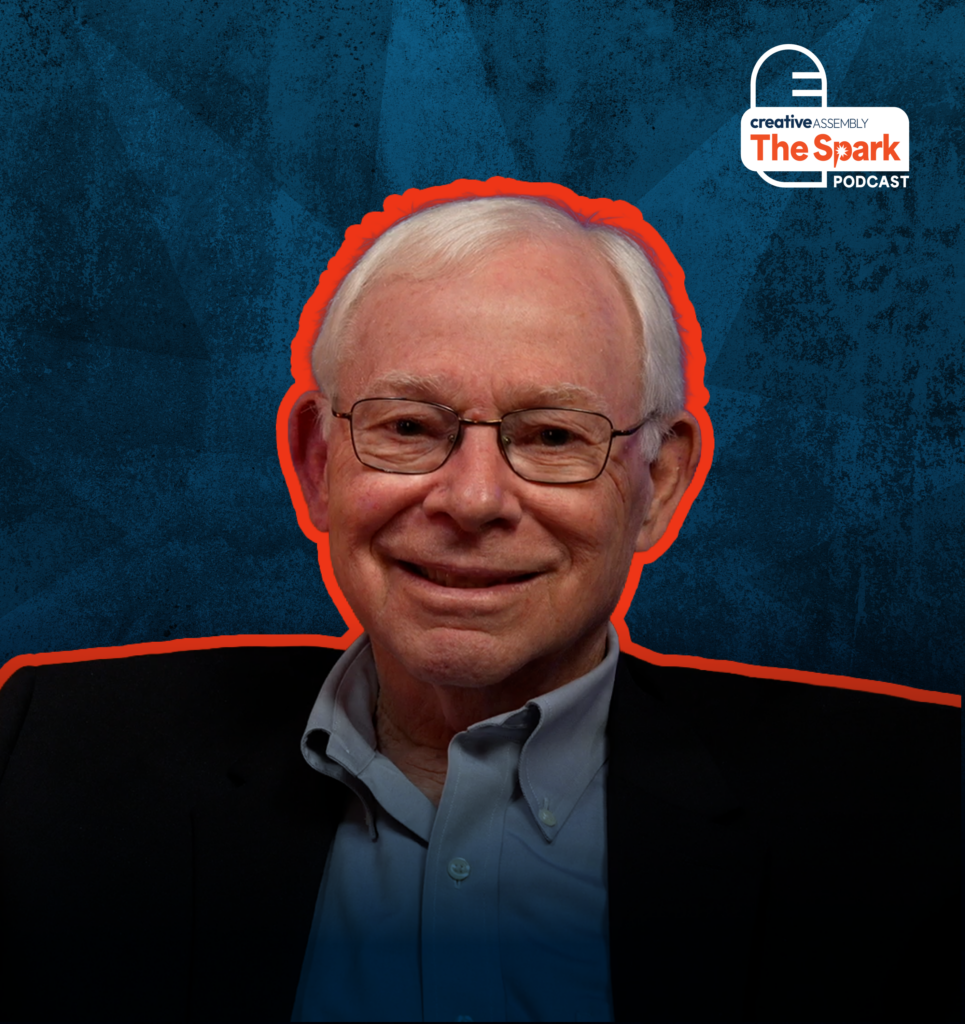
What does a 450-mile canoe trip have to do with becoming one of Nashville’s most respected brand storytellers? Nelson Eddy — former Managing Partner at FINN Partners and official historian for the Jack Daniel Distillery — joins Mark Scrivner to trace a 40-year career that took him from an English classroom to the boardrooms of two agency mergers, the launch of the Nashville Predators, and decades spent safeguarding one of the most storied brands in the world. This conversation covers brand authenticity, mentorship, the discipline of “asking what else,” navigating the Nearest Green story with care, and why respecting people is the real secret sauce behind long client relationships.
Episode Highlights
01:03 – Mark introduces Nelson Eddy and his background at FINN Partners and Jack Daniel’s
02:09 – The 450-mile canoe trip that landed Nelson his first agency job
09:34 – What stayed consistent — and what changed — through two agency mergers
17:06 – Building the Nashville Predators brand from a hockey stick T-shirt to a saber-tooth tiger
26:04 – Becoming Jack Daniel’s official historian after 20 years of research
33:16 – Telling the story of Nearest Green, and why patience mattered
47:16 – Nashville’s hidden lore, from Sulphur Dell to stone box graves
53:49 – Nelson’s closing lesson: respect is the foundation of everything
Transcript
On Creative Assemblies, The Spark Podcast, our mission is to amplify Nashville’s diverse creative voices, foster growth through shared journeys, and inspire a city that thrives on collaboration.And now, here’s The Spark.Welcome back to The Spark.I’m your host, Mark Scrivner, and today we are joined by Nelson Eddy.Nelson is the former managing partner at Fenn Partners and official brand historian at Jack Daniel’s Distillery.Yeah.Nelson, welcome to the show.It’s great to have you here today, and thank you for taking time out to be a part of it.Well, well, thank you for doing this and, uh, inviting me.And thank you for doing this for the creative community.Well, well, we appreciate it.And it’s stories like yours that I know we’re gonna dig into that everybody wants to hear.So, you know, to start us off, though, as I was doing a little research on you, you were an English teacher, and you got your first agency job because you paddled a canoe 450 miles from Nashville to Memphis- Yeahand, and wrote about it, and then that created your first opportunity in the agency world, right?Yes.Yeah.Why don’t you tell us a little bit about what were, what were you thinking?Well, I, you know, I always dreamed that I’d write the great American novel, so I wanted to be a writer.And I wanted to, uh, write, you know, literary fiction.And, you know, there’s not like a, a place you can go and apply to write for literary fic- You’ve just gotta do it.Um, so the next best thing, since I had to live, was to teach.The only educationI’ve never been qualified for anything I’ve ever done.I, I, you know, um, people ask me for career advice, and my career advice is make friends.That, that’s my career advice is make friends.And people today call that networking.I like to keep it a little more human and say just make friends.Sounds a little more genuine.But, so, um, I’d only had education, uh, introduction to education.But it was a private school, and I’d built a set for them, um, in the summers during my college years.I did some stuff for them in their theater department.And they had an English and theater, uh, teacher drop out.They knew I could build a set.They knew I was an English major, and they said, “Hey, will you come teach here?”So I did, and I loved it.I, I would still be teaching today if I didn’t have to grade.You know, talking about literature and watching young minds light up, it was golden.Uh, I never dreamed I’d be in the agency business.I, I wanted to write.Um, but you know, I, I don’t think for creative people any experience is ever a waste because anything, uh, that you’re exposed to, um, fuels or becomes a part of what can later be a creative expression.The more you know, the broader you are in your knowledge and curiosity, uh, the better you’re going to perform.So there’s no, you know, creative people who have been firemen or fire people or, or whatever they’ve done, um, can, uh, help the creative process, I really believe.And so I didn’t know I was gonna do that.And there weren’t as many schools back when I was going through college that offered just a particular advertising degree or, uh, things were a lot more general in those days.It was either an English or an arts track, uh, BA or a science kind of track and math, that kind of thing.Um, so that’s how I got into teaching.And I got into the agency world, yeah, on my summers as an English teacher, I would try to do some travel writing.So a f- friend of mine in the music business and I got in a canoe, um, right Downtown Nashville, paddled that canoe all the way to Memphis.You know, went down, uh, the Cumberland to Lake Barkley and then to the Ohio, uh, and then down the Mississippi.We ended up in Mud Island in Memphis, and that was 450 miles.And we wrote about it, and we did, I think we did Talk of the Town, an interview on Talk of the Town.A, uh, the Banner, uh, took the story and photographs I’d made along the way, and so that was kind ofUh, I used that clip, um, to, to interview at Divan, Moll and Lawrence at the time, which was a PR agency with very little advertising.And so, um, I had a friend there.And I, um, you know, I loved teaching, but my wife was working, too.We were gonna have a child, and so I was gonna have to pick up- More of an income.And so, uh, I had a friend at Dye, Van, Bond & Lawrence, and I said, “Hey, will you look over my resume?I’m not sure it’s very business-oriented.It sounds”Uh, ’cause I was really gonna end up probably a professor at a university, and so it was kinda very academic.She looked at it and corrected it, and, uh, she said, um, “Why don’t you just come to work here?”And, uh, the way she got me into the agency world was she told Hank Dye, who’s president and owner, um, one of the partners, uh, she said, “He looks like he’s homeless, but just hire him.”And so that was my great, uh, you know, uh, kind of resume- It was your introduction.Yeah, yeah.Wow.And my first job there was to write live radio read commercials for the Grand Ole Opry.And so I did that for a little while, which was, here’s a kid from Michigan who’s come to the South, but really, you know, lovedGood writers are probably also good researchers.And in fact, that’s the part I like the most.If you can get to the information, the, the heart of a story, um, and then weave the parts together that really create an emotional response on the part of people who are either listening or reading or viewing, um, I think that’s, uh, key.So I love the research, and I love the writing, and that was my start.Wow.Have you ever looked back and thought, “What if they had Instagram or any of the social channels back in that day,” like how many followers you would have had- Ohbased on taking this 450-mile trip?Yeah, yeah.I mean, yeah, it, itNo, I’ve never really thought in terms of that trip.It was a, it was an incredible trip.You know, we’re in this little canoe locking through these big- Mm-hmmlocks on, um- Yeahthe Ohio River.They would lock us through in a canoe, and I was just amazed by that.Um, you know, we carried at the time, you know, we were too poor, this musician and I, to afford, like, freeze-dried foods, high-tech foods to lower the weight.So we just had canned stuff in this, middle of this canoe, paddling it, but it was a great trip.And, uh, the people you met along the way, you know, uh, stories are best told with people, and we met some real characters all along the way on that trip.I’ll bet.I’ll bet.Well, what did, what did 4 rivers and a canoe-teach you about storytelling that maybe the classroom neverWell, you know, um, I, I wouldn’t exclude the classroom.I would say storytelling is just vital to transport information.People eyes will glaze with a steady stream of information, but if you wrap it in a story, whether it’s history, whether it’s financial numbers, uh, whetherWhatever it is, if you’ll wrap it in a story, people, um, and this has been proven and scientifically tested, people will retain and remember the information better if it’s wrapped in a story.Mm-hmm.It’s ’cause we’re wired for stories.Yeah.Well, you spent a long time at, uh, DVL, and then, you know, I know just over the past, what, 8, 5, 8 years, they merged with Siegenthaler and became Fenn Partners, and I know you were there at that time.Yep.You know, what, um, what do you think, like, stayed consistent over there during that, that merger, and then what, maybe what changed?You know, it’s rare for 2 companies to merge and be successful.It’s even more rare for a merger to merge again and be successful.Mm-hmm.And that’s exactly what we did.I mean, uh, Fenn Partners, um, wanted to have a foothold in Nashville, who wouldn’t, uh, because of the communications that come out of this, uh, town and the creativity that comes out of this town.So but, uh, neither Siegenthaler or, at the time it was DVL, were big enough, so they, uhIn fact, it was Siegenthaler and Beth Siegenthaler, um, who suggested, what if they joined with DVL?And together we were large enough to be of interest.And so even though we merged, there was, I, I think it was, uh, maybe a year or 2, can’t remember exactly, um, before we were folded- Yeahinto the larger company.And, you know, like most mergers, initially, uh, there’s a little drop because people are getting to know each other and processes- Mm-hmmand all of the things you have to do.Uh, but then it took off, and then we were folded into Finn, and again, there’s a little lag there ’cause now you’re part of a bigger corporation, and, and then it took off again.And so it, it was very successful.And I think what was consistent in all of that is valuing people, um, whether they’re clients, whether they’re the audience you’re talking to, uh, w- and most importantly, the people in the agency, if you value them, um, that was a consistency.Uh, we were never looking at DVL to merge with a company in New York, a global PR firm at the time, and at the time, um, that we were acquired, DVL was, uh, probably 40% advertising, 60% PR.So over the years- Mma- and we were the only one in Nashville that was like that.You were either a large PR firm with a little advertising, or you were a large advertising agency with a little PR.Nobody had really cracked the nut of how you can do both, ’cause they’re, they’re very different- Mm-hmmapproaches, methodologies, thought process, client relations.It’s all very different.Um, but we were able to do that, and that was of interest to Finn.But valuing people, and I know that sounds, I mean, it probably sounds over simplistic, but it’s really hard to do.It means things like you value people’s time.When somebody puts the work in the project, and sometimes, um, clients have changes, you’ve gotta value the people’s time and make sure that, um, you have a strong enough relationship that you value the client, and you have really become their friend and their, um, really kind of a guide post for them, uh, important to them, so that you can have these serious conversations about somebody else’s time-Mm-hmmthat they’re devoting.But if you value the people and those, both those relationships, that’s golden.What it also means is when a client is not valuing the people in your agency- Mmyou know, they become a scapegoat, or they get thrown under the bus, you need to let them go.And, you know, it’s not really a source of pride, it’s unfortunate, but that has happened more than once in my career- Yeahwatching a client being let go, and in some cases a, you know, a healthy client, because we were gonna lose, um, the character of our agency, and we were gonna lose people.I’ll give you one more example- Yeahof valuing people.You talked, before this c- discussion began, about 2008, and that was a tough time.Mm-hmm.Well, in 2008, uh, we were DVL at the time, or, or Dye Van Mall Lawrence, and, um, when that happened, the partners, I was not a partner at the time, but John, um, um, uh, let’s see, Hank Dye, Tom Lawrence, and John Van Mall said, “Look, we’re gonna take a 20% pay cut.”I don’t exa- uh, these aren’t exact numbers.Mm-hmm.But it was like a 20% pay cut.The employees will take a 10% pay cut, and we c- think we can get through this- Mmwithout letting anybody go, so that when it’s over, we’ll be fully staffed.We won’t be looking- Mm-hmmto hire anybody.But the partners took a big cut.At the end of the year, we had done so well that they paid back what was lost in a bonus.So in other words, all the money- Yeahcame back.Because at the end of the year, things began to turn and take off, and we were ready to roll.I, you know, IThat created so much loyalty within the agency, and again, it was something where people were valued, and not losing people, keeping them.Um, you know, it’s a business, I understand, and when businesses- Mm-hmmget tough sometimes, uh, w- in our history we’ve had to let some people go.But it has been the exception rather than the rule, and I think that’s important.Well, I think that is such a good lesson for any agency owner or any creative, is valuing people, and those examples are super powerful examples for people that most people never know those stories.They never hear that, hey, everybody took a big pay cut, but they did it for the greater good- Mm-hmmand they were all made whole in the end.And- Yeah, it worksI can only imagine the loyalty.Support for The Spark comes from our sponsor, Snapshot Building something that matters takes more than a good idea.It takes a brand people trust and a system that reaches the right people.Snapshot is a performance-driven marketing agency that helps businesses grow with strategy, creativity, and measurable results.To learn how to build scalable systems for sustainable growth, visit the link in our show notes.You all, like DVL and Siegenthaler, 2 of the most respected PR firms here in town, they came together to become Finn Partners.That was kind of a shocking th- it was, uh, very surprising, but, uh, you know, it was also, uh, very interesting, I know, for the entire agency community to see that happen, and, uh, Iseeing it work out and you all to be as, continue to be as, like, successful as you’ve been has been just inspiring from the outside, so.Well, well, thank you.Yeah.Thank you.Well, you also, I know you stepped away for a stretch to, uh, become the VP of marketing for the Nashville Predators too- Yeahin the early days of, uh, the Preds, and, uh, you helped them get that franchise up and off the ground and played a major part in all the branding and marketing there.Do you wanna, you wanna talk a little bit about that?Well, well, first of all, that was a team effort.I mean, um, Tom Ward and all of the people, uh, of the franchise, you know, Craig Leipold, the owner- Mm-hmmall those people, Randy Campbell, who was from our agency and went before I did over to the Predators, all of those people, so many people on that side and on our side, um, were, uh, a part of that.I w- I just happened to be, uh, on our side of the equation.I was the lone Northerner.I was from Michigan- Mmso I had, you know, I grew up ice skating and playing hockey, so it was, you know, I really wanted that account.And I think, um, we s- we sat at Tootsies with Craig and, and some others.I’m not sure exactly who was in that group.Um, I know I’m forgetting somebody, but we w- sat at Tootsies, and that’s where the deal was done, that we would be the agency.And at the poin- that point, you know, it was kind of like, is this really gonna happen in Nashville, Tennessee?Uh, it was, it was like 13,000, right at that number, of full season tickets that had to be sold.We didn’t have a name.We didn’t have players.There was nothing.Um, a- and, and I think the first, uh, the very first line before we got even a name was, “Stick it, Nashville,” and there was a hockey stick, and it was on a T-shirt.And that was about the beginning of it.It was really, umAnd it, I don’t know that this has ever been replicated since.Mm-hmm.I mean, um, new franchises that have come into the NHL have had the advantage of learning of what was going on in Nashville.And part of it was the product too.Uh, the music industry was such a part of it.But yeah, um, coming up with the concept of, you know, one of the things they had said to us is, “Look, there are, we, we wanna be a part of the music community.”Mm-hmm.”But most of the sports,” at that time, the Titans hadn’t really landed, are, uh, it’s about music.It’s, you know, uh, the Nashville Sounds, uh, that kinda thing.And we’d like to have an identity that was a little unique.We, we don’t wanna, w- we embrace the music community, and guess what?It’s those, uh, music personalities who really helped us sell those tickets, but they want something different.So we did some research, and I was reading through, it used to be first American Bank, I don’t know what- Mmit’s now, like a steakhouse down there.And I read an article, and they were digging the foundation of that bank, and they found a cave with, um, dinosaur bones in it.And, and one of the things they found was a saber-tooth tiger skull, which eventually was the, the bank gave to the Predators to display.They still haveAnd so there was this saber-tooth tiger, and that all died out during the Ice Age.So the whole thinking was the Ice Age has returned to Nashville, and here is, uh, this beast.Genius.And then the, you know, the public chose the name.The team had already chosen this design, saber-toothed tiger.The public voted and came up with a name.I might have made it something different, but that was the name.And so it worked.It really worked.Mm-hmm.Um, and then the, you know, our advertising was powerful, but the experience in that stadium, you know, I’ve been to Toronto and, uh, different places in Canada to watch a NHL hockey game, and it’s all about the game.Mm-hmm.Back then especially, you just watched the game.And then Nashville was like rock and roll hockey.I mean, there was music playing all the time.There were movie clips, and that was all really new.Now it’s kind of happening everywhere.Mm-hmm.But I have to really, hats off to that franchise, and Tom Ward particularly, um, for really making it an entertainment because people didn’t even know what the rules of hockey were, but they knew if they showed up, and I think that illustrates that they’d have a good time with entertainment.Mm-hmm.Yeah.But I think that really illustrates, you know, the power of understanding the audience, what really motivates them, and how your product can align to that while still being true to itself.Um, you know, it’s important br- there’s no end of brands who have gotten off track with their audience.I think one of the most recent ones is Cracker Barrel.Mm-hmm.You know, you’ve gotta know who your core audience is, and you don’t- while you wanna add to that audience, you need to honor the core in all that you do.Uh, and I think that’s been at the heart of the success of things like the Predators, Jack Daniel’s, uh, even the Grand Ole Opry, those things.They understand their core.They wanna introduce more, but stay true to your core.Well, you know, uh, before you came on the show, I’ve been asked by many, many people to see if I could get you to-convince you to come on the show, and, uh, so I’m very thankful- Surethat, uh, Chuck Creasy helped us, uh, connect.But, you know, just knowing how many people looked up to you enough to ask me to get you on here, I can only imagine how many people you’ve shaped in the Nashville creative community over the years.And I guess with that, you know, my question would be, like, you know, how, how do you help or how have you helped other writers, other creatives- Hmmto find their best work- Hmmover the years?Um, I mean, i- in a kind of a word, usually it’s by asking, “What else?”Um, not settling on the first answer, um, and even before a creative director would see it.As, as you’re looking at this, go in more than one direction.I know that, you know, as billable hours become the drumbeat of many places, the opportunity to explore, um, you never know when somebody can take something, um, and instead of just doing the job, they do something that’s not only fulfilling for them, but fulfilling for the client.Now, having said that, there are some times you just need to do the job.Um, but having an eye for those opportunities and, and knowing and asking yourself the question, “What else?”Not going with the first answer.Sometimes the first answer is the best answer, but not always.Um, just exploring.And, and then, you know, empowering people to do that as a creative director, um, and not micromanaging.Uh, you know, uh, so many of us got to the role of creative director ’cause we were really good at something.But, um, you need to kinda let go of that ego.Mm-hmm.You know, get the right horses and let ’em run.Just let- Mm-hmm’em run.Um, and be there to support ’em.Um, yeah, there was an art director one time, I had to tell him, “We can’t do a UT brochure in a red,” that that would be categorically wrong.Even though it would be really different, you can’t do a UT brochure in red, you know?So there’s some times you gotta step in, but more times than not, and if we’ve, we’re presenting more w- than one idea, I always love to present an idea that is so on the edge it makes us nervous.Um, if nothing else, it will make an idea that, that is very creative far more palatable.Mm-hmm.But sometimes they’ll look at that really super exceptional idea and they’ll go, “Yeah.We’re, we’re gonna do that.”Um, you know, uh, just, “What else?”And then, and then let ’em do what you paid ’em to do, and, uh, they’ll love you for it.I mean, if you let them, um, and along the way, if they watch what you’re doing and how you think about things- Mm-hmmI would rather teach by example than by telling people stuff.Yeah.Um, it, it just works better.Well, let’s, uh, talk a little bit about your, uh, current role of historian for Jack Daniel’s Distillery.There’s probably, uh, a ton of people listening to this that would, uh, that would love to have that opportunity to even just have a little work with Jack Daniel’s Distillery.But you’ve, uh, you’ve been a major part of representing Jack Daniel’s since the late ’80s.Mm-hmm.Um, and now when you retired, they made it to where you couldn’t retire.You had to become the, uh, national historian ’cause you knew so much about the brand.Well, a, a, a little note there- Discussiona little note there.I have retired entirely.Okay.I was made a historian probably 15, 20 years ago.Okay.Uh, but I’ve worked for that brandAt the time of my retirement, I was 40 years with the agency, 38 years with a client, Jack Daniel’s.Yeah.And when I started it in 1987, uh, they were getting ready to introduce the first new whiskey in a century.They’re, they’re introducing two and three a year now.Mm-hmm, mm-hmm.But back then it was like, it was Old No.7.And still, Old No.7 is the predominant, uh, whiskey sold around the world in 170 countries.So they were introducing their first, and the, the code name for it was the Hilltop Project, and what it became was Gentleman Jack.That was their first new brand in a century.And so we, umAnd they wanna introduce it entirely with PR, no advertising, for the first year, which was replicating how Old No.7 took off.It took off initially, um, by kind of a whisper campaign they called it back in the ’50s.Uh, it showed up in True Magazine.It showed up in, um, a couple of other magazines, and it was all about this little place in, in Tennessee where they make whiskey the old time way, and they told this story of Lynchburg.Now, this was an age when all of the bourbon advertising was, you know, men in suits or tuxedos at the opera, silver trays with big bottles and glasses.It was all aspirational.Nobody was talking about these rural Tennessee people making whiskey.Uh, you know, that’s kinda the forerunner of what became the Saturn campaign later- Mm-hmmum, where you show the makers, not the drinkers in that case.You show the maker’s world.And that’s what they did.They, they used black and white photography, even though color was, was what bourbon was doing.They used black and white photography for one reason.Back in the day when they were in the ’50s, black and white said truth.Said truth because all newspapers were black and white.Hmm.There was no color in, in, in news.So to have an ad, all these ads, stories from Lynchburg with black and white photography said, “This is the truth.”Now, it was romanticized- Mm-hmmbut there was always a nugget of truth in what they did, and th- they told people, “Come visit us and see.”And you went to Lynchburg, and people were always amazed.Like, “Have you paid these people to whittle on the square?”And stuff like that.No, that’s just what they, they do in Lynchburg.Mm-hmm.So anyhow, that was kinda the start of all that.Man, I’ve taken us- Well, you actuallySo you started at DVL a couple years before- 2 yearsthey actually landed Jack Daniel’s.And, uh, so you were a part of getting the Jack Daniel’s brand, um, management down here in Nashville.W- Talk, talk a little bit about that.Well, it was, you know, uh, Hank Dye and Virginia Patterson was kind of the A- A- E on all of that.She was an account supervisor.They’re, they’re really the key to all that.Um, I was important only because I was a copywriter and I was assigned to the brand, and that was because of, I think, the success of things I’d done on Martha White, uh, the Grand Ole Opry, uh, Johnson & Murphy Shoe Company.I’d written some stuff around that.And s- and the Homecoming Train with Lamar Alexander, who was governor.Done some writing around all of that.And so I was the, the writer on the project.And at the time, the person leading that, his name’s Art Hancock.He was Jack Daniel’s, hired in the ’50s before Brown-Forman boughtWhen the Motlows owned it.He was hired, he was the very first marketing person the brand ever had.This is the ’50s, and here we are in the ’80s, and we’re talking to the guy that, that grew it.Mm-hmm.And so, um, again, it was one of those things about making friends.I don’t know what it is.I, I’ll tell you what it is.Um, people say my superpower is that I listen, I listen to people.But here’s the thing, the reason I listen, I was born totally deaf in my left ear.Hmm.Totally deaf.And so I look at people and watch their faces, because if I don’t, I might not hear a thing they say.And while that was an obstacle I had to overcome, it became a strength, ’cause people go, “Man, he really listens.”And when you listen to somebody, when you honestly listen to them, they feel important.They feel like they’re gonna share more with you than they might.They feel like you care about what they’re saying.And so the fact that I was deaf in my left ear, um, I think really helped me connect with pe- So I connected with Art Hancock and, you know, he really took me under his wing as a marketing person.When he retired, he shared all of his files with me, so I had the complete history of Jack Daniel’s.He said, “Look, I want you to learn some things about Irish whiskey.”Took me to Ireland, learned about Irish wh- whiskey.He said, “Look, you need to know something about, uh, scotch.”Took me to Scotland, I learned all about that.They had connections with Bushmills and with Glenmorangie- Hmmin Scotland.And so really that, uh, relationship and that trust, umAnd as a writer, of course you’re doing a lot of research on Jack Daniel’s because you wanna keep it true to the brand.Even though it’s a, a line extension, it’s gotta be true and ring true.So there’s a lot of research that was done.And just because I’d amassed all of that, um, information, interviews, research, that’s what led, uh, for me to become the Jack Daniel’s historian, just because I’d researched for 20 years at that point, and then served that role for 20 years about.Wow.Well, um, you know, when I was doing a little research on you, sticking with the research subject, you, um, also did a lot of research in elevating a brand of an enslaved master distiller- Mmnamed Nathan, um, Nearest Green- Yeahto create, like, an very iconic new brand in the bourbon whiskey world.Yeah.And, uh, like, I love the story.It’s probably one of the most inspiring stories, and I’ve been down a few rabbit holes just to even dig even deeper, and it taught me a lot about even Jack Daniel’s in his early days and how giving he was and, um, everything.But what a great story.Ta- talk a little bit about that.Well, it, it’s, you know, it’s, it’s been treated as it was a surprise and uncovered and discovered, but there are basically 2 biographies of Jack Daniel’s.One of them is called Jack- The Jack Daniel’s Legacy.It was written in the ’60s.And then there was another book called Blood and Whiskey, um, which took a lot of the information from, uh, the Legacy book and built upon it.Uh, and it was written in, like, 20, I don’t know, 20, in, in 20-teens of some, some po- time.So there were those 2 books.Both of those books told the essential story of Nearest Green.It just tells you how much people read.Mm.It was there.And all you had to do is pick up a book.Uh, and the reason it was there is because the Daniel’s family and the Motlow family, who own Jack Daniel’s, told the story.Um, it wasn’t hidden.And the truth of the matter, the story of Nearest Green is the story of every bourbon or whiskey in the South.And I say that because making whiskey is such a labor-intensive thing that back in the day, in the day when people were enslaved, it was such a labor-intensive, uh, thing to be doing that, of course, it fell to the enslaved to do much of it.Even in, uh, George Washington’s distillery, um, there were enslaved individuals that took part in that.Jack Daniel’s never owned slaves, um, but he hired somebody who had been a slave to be his first master distiller.But anyhow, that story was out there.It was available to anybody.And, you know, in our PR plans for, like, I don’t know, 3 or 4 years before that story took off, we’d always put in, you know, maybe we need to tell the Nearest Green story.And there was no reason we didn’t really tell it.I mean, if there’s any reason is people forget.When bad things happen, people don’t necessarily like to talk about it.I agree totally with this whole idea of we have to tell the fuller story, but In the South, people just didn’t wanna talk about slavery.Mm-hmm.It was a sensitive subject, and I know it was sensitive for everybody, of course, and it needed to be told, but it took time.So, uh, the occasion, the reason the story came out, it was not a story uncovered by The New York Times.It was not a story uncovered by Fawn Weaver, though, to her credit, she greatly, uh, increased the amount of information we had around the story.It was a story introduced to the public by Jack Daniel’s.So in 2016, it was gonna be the 150th anniversary of the distillery.And by the way, they told, uh, the story of Nearest Green in, um, an annual report one year.They told it, uh, down at their visitor center.There was a little display on that.Uh, they told it in a calendar they sent to loyalists.It’d been told, but not in a big, broad advertising way.So in 2016, they said, “We’re gonna tell the story.It’s our 150th anniversary.Here’s a list of stories,” it was one of a list, “that we’re gonna tell about little-known things about Jack Daniel’s on his 150th birthday.”So we began getting ready to, uh, distribute that, and we were talking to The New York Times, and they said, “We’d like an exclusive on this story.”And so they came down to Lynchburg, and they did the interviews, uh, with me and with various folks down in Lynchburg.Uh, Claude Eady was one of the people who’s a, uh, we found out later, he’s related to Nearest by marriage, but still part of the Nearest Green family.And so when the story came out, um, it was something, the headline was something like an ingredient, and Jack Daniel’s didn’t know, you know, um, uh, it used the word slave in the headline.And so m-many people did not read beyond the headline.And the story had a tone of a gotcha, even though it wasn’t a gotcha.Mm-hmm.It was, it was pitched to the writer.So with that tone and with that headline, all of a sudden, people were like, “Jack Daniel’s,” you know, “What have you done?You’ve taken advantage of this enslaved individual.”And, and things were going crazy.I, I have to compliment Brown-Forman, that in the midst of all this- Mm-hmmthey were calm, and they, uh, had a confidence that with time, uh, and with more, uh, discretion and more investigation, the whole story would come out.I mean, that’s a lesson today of don’t always believe the first thing you hear.Give it time.The news cycles are so fast now- Mm-hmmmost people don’t give it time.So anyhow, um, so Fawn Weaver reads this story in Singapore in the international copy of, uh, of The New York Times, and she becomes fascinated with the story.So she comes to Lynchburg in September.The story was out in the summer of that year, which w- which added to the craziness of this.If you remember the summer of 2016, it was f- it was a racially charged summer.We had this, uh, campaign going on for president.We had all this stuff going on- Mm-hmmthat just made it a highly charged time.So that story became a lightning rod for people that really wanted to, uh, erupt over several issues.Well, she comes along and does the research, and she says, “Look, lo and behold, Nearest was not enslaved under Jack.Jack worked as a boy beside this slave.His, his mother had died.He’d left home to work at the Call farm with Nearest Green making whiskey.”So here’s a young boy who’s looking up to an enslaved man and learns from that enslaved man not only how to make whiskey.He learns from him a love of music.Nearest played the fiddle, and Jack would have a love affair with music, had an upstairs ballroom in his house.Who does that?He had a Steinway grand.He would have dances.This all rises from, I think, that kind of relationship they had.When Jack later owns a distillery, it’s after emancipation, it’s after the Civil War, and he hires Nearest, his mentor, as his head distiller.They didn’t have the term master distiller.He hires him.Um, he met him because of Dan Call, the owner of the distillery, but also he was a friend of, um, Nearest’s sons, especially George Green.And so George and Eli were around Jack’s age, and then he gets introduced.So you know, as muchI hate to use the word colorblind because it’s such a cliche, but as much as a person could just look in the 1860s in the South as another person, as human, and, um, to be beloved and trusted and honored and respected, Jack did that with the Greens to the point there’s been a Green working at the Jack Daniel’s distillery in Lynchburg, Tennessee, from the 1860s to this day.Wow.Um, and at, you know, th- they’ve been property owners in town.Um, if you see the picture in Lynchburg of Jack and his crew, this is taken at the turn of the century in the rural South in a town called Lynchburg.Jack Daniels is si- seated beside an African American, and you go, “That just doesn’t happen, that the owner of a business sits that man down to his right.”And that’s the son.Uh, the family has said that’s the son, George, of, uh, Nearest Green.We have no pictures of him.And so it, it turned out to be this, um, incredible story that benefited Jack Daniel’s certainly.W- we owe a lot to Fawn, who came in and, and didUh, she poured a lot of resources into res- uh, researching that story, to the Green family, who really were allowed finally to step forward and tell the story.In fact, I give most the credit to all this to the Green family.Um, you know, instead of being bitter that they might not have been recognized more, um, they stepped forward and really embraced the story.Um, so that’s how that all took off.Wow.It wasAnd I, I will tell you, at the time we were doing this story, um, and it’s because of who I am, you know.I, I’m, I’m, uh, I’m thisAt the time, I was this middle-aged white guy from the, from the North.I had no idea.I confess, I had no idea how important this story would be to a community, to a community whose work had been underappreciated and now had a hero that was associated with a brand that was beloved in 170 countries around the world.I just didn’tI had no idea.And I will tell you, of all the things I’ve ever done, uh, the most important thing I think I’ve done, and not on purpose, I walked into it ’cause I thought it was a good story, is telling the story of Nearest Green becauseAnd I know there’s a lot going on right now that’s unfortunate.Um, a- amongst all the financial, uh, and the lawsuits and everything that’s going on there, the thing that I mourn out of all that, and that I think people should remember, is I mourn that the Green family kinda feels like their name’s being drug through the mud, and they shouldn’t feel that because there’s still power in that story.And then the other thing is this icon for a community is f- has been tarnished a bit.I’m hoping that in time, uh, with new ownership, that, that the story can go on because it’s so import- It’s bigger than me.It’s bigger than Fawn.It’s bigger than- Mm-hmmum, the industry.Um, it’s, it’s just a really good story.Man, I love to hear that.I mean, you, there’s nobody to tell it better than you- Nowith everything you did.Uh, and so, you know, I appreciate you sharing that on the show ’cause I, again, I’ve, I’ve went really deep in, uh, trying to learn as much as I could about it.Just fascinating.Well, a- and again, you know, it, it’s, it’s a bigUh, there’s a large group of people involved in that.Mm-hmm.Fawn for sure.The people at Jack Daniel’s who, uh, initially when it was rough, uh, weathered the storm, and then it became a beautiful thing.Uh, the people in Lynchburg who, umAnd, you know, largely the people in Lynchburg knew the story ’cause they’d read the books.Uh, so it wasn’tIt was, like, old news.It was like, “Okay, why is everybody so excited?”Well, I know you say you’re retired, and you share time between here and Townsend.Yeah.Uh, you know, and I know you get to go visit the distillery from time to time.Yeah.Before the show you mentioned going down f- uh, every once in a while to do trainings and whatnot.Yeah.Is that still your main involvement?Uh- I, I’m kind of of, of counsel.I had a call today that I answered, and it was a history question.Or, uh, sometimes it’s just, umYou know, I have a very varied, um, world of how I’ve expressed things from writing books to doing, you know, uh, public performance shows, uh, to doing films.So sometimes I getcalled to ask, you know, what’s the best way to tell a story?Um, but yeah, I’m just of counsel i- if anything today.And, uh, I’m a Tennessee Squire.You can’t be a squire a- as you work for Jack Daniels.And so I have this huge num- You know, it’s, it’s kind of an honor to have a low Squires number.It means you’ve been there a long time.And my number’s like 15,300 and something.I said, I’m going, “What’s up with this?”And they said, “Well, you know what the significance of that 15,000 whatever?”I said, “No, I have no idea.”I, I looked at it, tried to figure it out.They said, “That’s how many days you’ve worked for Jack Daniels.That’s why your number’s so big.”And I go, “Okay, I can accept that.”Wow.But, so I’m, for all the people out there who are Tennessee Squires, um, I’m, I’m glad to be part of the club now.Yeah.Well, you, um, you know, uh, as I was doing, again, research, um, you’re also known locally as someone who’s the guardian of Nashville and Tennessee lore with Sulphur Dell, and that’s a story that, uh, I know has went around with the baseball history and prohibition era.And, uh, I guess what draws you to, like, preserving all these stories?Wow.Uh, you know, I think it’s just a fascination with, uh, people, again.Um, you know, when you think about the different people who, uh, played in Sulphur Dell and what an unusual, uh, ballpark that was with the right field you ran uphill to catch a ball.It was just a, a, a fascinating place.But all the people who traveled through Sulphur Dell or, or the Ryman.You know, I was honored to, to write a show.Here’s a guy who’s, you know, an advertising PR guy writing a show for an entertainment company.Seems kind of odd.But Steve Buchanan, again, he was at the Opry, reached out to me and our agency, and I, I wrote the show about its 100th anniversary.And the Ryman is just filled with all of these names from history.It’s got such a rich, rich lore.Nashville is this incredible town, uh, that so much has happened, and the stories are so colorful, um, that, you know, it’s, I, I can’t get away from it.Yeah.Well, it’s apparent.You came here.You did the canoe trip.You have stayed here your- Well, and I think, I-the remainder of your life.I, I think you, you know, you came here.I think that’s essential.I know there’s a lot of people out there who are just coming here, and there’s a lot of people who’ve been here far longer than I have going, “Can we please close the doors?”But coming here, one thing that new people bring is they’re awed and floored by what they find here, the depth of the stories, the richness of the place.Uh, you know, that Green Hills is built on an Indian graveyard, and that you can go under some of the houses in Green Hills, and in their crawlspace see where these stone box Indian graves are from ancient times.It’s just, there’s no, it sounds like a Herb’s- That, uhpicture.Yeah.But, but there’s- That’s the first time I’ve heard that one.Oh, yeah.So, uh Yeah.Uh, Google stone box Indians in Nashville.There’s, there’s a rich history there.But, um, you know, the Natchez Trace coming through, uh, Nashville, uh, just the Indian mounds in the area, the, the prehistoric bones found in a cave, um, you know, uh, the Cumberland River and stories on the river- Mm-hmmum, the town and all of its, you know, Printers Alley and all of these neighborhoods.There’s just, it’s so rich.Um, you know, the State House and people like Davy Crockett and, uh, I mean, Andrew Jackson.You could just go on and on and on.We, um, and, and we kind of build on this foundation as people today, as creative people, as songwriters, as singers, as businesspeople, as politicians.We’re all building on a foundation that’s rich and varied.And, um, what are we gonna do?Are, are we gonna leave a story worthy of that foundation or not?You know, you, um, you spent 35 years, or longer, um, and with DVL, Finn Partners.Uh, you don’t see that anymore in people that not quite that loyalty.Was there ever a time where you thought about leaving?And then if not, what kept you there?Uh, you know, uh, uh, what kept me there were people like, uh, Hank Dye and Tom Lawrence and John Van Mol.The, the quality of the people there.I left for that short time period- Yeahto become, uh, VP of marketing at the Predators.And you know, one of the key things they wanted me to do was to make sure Jack Daniel’s was a sponsor of the Predators, and I got that done fairly quick.And then here’s this agency guy working on one client every day, which I loved what I was working on.And so DVL said, “We want you to come back ’cause we wanna make sure we still have Jack Daniel’s.”So it wasn’t about me.It was about this I’ve ridden on the coattails of, uh, Jasper Newton Daniel my entire career.So they said, “And if you’ll come back, you know, you can be creative director here, and you’ll be in line to be a partner.”So I went to Craig Leopold, and I said, “Craig, can you give me a percentage of the team?”And he looked at me like I was a fool.And he said, “Why should I give you a percentage of this team?”And I said, “Exactly.My old partners, the old boss, has called me and said he’ll give me a percentage of the business.What do you think I should do?”And he looked at me.To his credit, he said, “You should go.”And so I left.Uh, we’ve had conversations, uh, many times since.A couple years ago we were in the booth, uh, in a suite together at the Predators celebrating the 25th anniversary of the team.Uh, he’s a friend.Uh, but he let me go back.He told me to go back.And, um, it’s really the, the people.I’ve stayed there because, uh, they valued people.And I’ve watched people leave to go to other places and want to come back because people weren’t valued.And, um, there’s a strength, uh, to that, I think, and where it’s most strong is in the client list that we had that were 30- and 40-year cl- Jack Daniel’s was not the only long-term, uh, client, and I, I s- the reason we had so many, and still to this day over at Finn, they have so many longtime clients, it’s because of people andrelationshipand treating people with respect.That’s the only, um, that’s the secret sauce, I think.What a good lesson.Thanks again.Uh, and I guess, you know, we could talk for hours.Oh, we could talk forever.This, uh, has been so interesting, exciting.I really appreciate you sharing.Is there anything as we’re starting to wrap up maybe that I haven’t asked you or that you wanna, you wanna share with the audience?No, I, I think, I mean, the, kinda the lessons we’ve drawn out of all of this, um, i- if it had to come down to any one thing, even the things that I said about, um, you know, what else and all those things, it gets down to respect of people.Respect the people you work with.Uh, get to know who they are, uh, their likes and dislikes.And, uh, you know, it cuts down on a whole lot of division if we’d all just get to know each other better, have more mutual respect, which is harder than it seems because, you know, competition between individuals, especially in the agency world, uh, for clients, and as a creative director you’ve gotta make sure and, um, you know, everybody’s getting an opportunity.Uh, and everybody’s got the, the work that has to be done, and then the things they can love on.Um, but at the heart of all that is just treating people right.Yeah.You’re so right.And Nels, thank you so much for everything you’ve done for the Nashville creative community and the agency world.And just what a good lesson, and, uh, what great stories that you’ve told and that you continue to share out there.It’s, uh, this has been such an honor to have you on the show, and really appreciate it and appreciate everything that, uh, you’ve done.Well, thank you.Thank you.Yeah, you’ve definitely blazed the trail for so many other young creative folks to come up in this world.And I know as a young agency owner, uh, back in the day, I always looked up to you all- Ohso much, and your name has always been right there front and center of doing some of the biggest stuff in town, so I can see why now.And so, and thank you all for joining us.I hope, uh, today’s episode inspired you as much as it did me.Uh, really appreciate you tuning in, eh, each and every week.Uh, it gives me the opportunity to share the amazing stories of so many great creative people in the city of Nashville, and I love doing it.If you would, just subscribe, rate, and review the show, just so we can get the message out to more people.And then we’ll see you next week on The Spark.And that’s a wrap on this episode of The Spark from Creative Assembly.Thanks for spending time with us and exploring the minds shaping Nashville’s creative future.If you’re walking away more inspired, connected, or energized, that’s exactly the point.A big thank you to our sponsor, Snapshot, and the incredible team behind the scenes who make this show possible.Your support fuels every conversation and keeps collaboration alive.So if you haven’t already, subscribe wherever you get your podcasts and leave us a review.Thanks again for tuning in.Until next time, stay creative, stay curious, and keep that spark.
Watch, Listen, and Subscribe



Listen to More Episodes
Meet Our Guests
Never Miss an Episode. Subscribe Now
Follow Us
New episodes
We publish WEEKLY on THURSDAY at 11:00am.