

From Founder to 100% Employee-Owned: Inside Shannon Litton’s ESOP Journey
Episode Summary
Episode Highlights
01:33 – Introduction: Shannon Litton, CEO of 3LS Professional Services and founder of 5×5
04:30 – The accidental path into agency life and becoming an EVP at 23
07:01 – Starting over with 5 kids: building 5×5 smarter the second time
17:01 – The secret to Best Place to Work: respect, trust, and the Five Dysfunctions of a Team
21:16 – The lunch conversation that introduced Shannon to employee ownership
26:27 – Surprising the team with 30% ownership on a Disney World trip
29:27 – Going from 30% to 100% employee-owned through 3LS
39:05 – Shannon’s mission: helping more business owners consider ESOPs
Transcript
On Creative Assemblies, The Spark Podcast, our mission is to amplify Nashville’s diverse, creative voices, foster growth through shared journeys, and inspire a city that thrives on collaboration.And now, here’s The Spark.Welcome back to The Spark.I’m your host, Mark Scrivener, and today I’m joined by Shannon Litton.Shannon, it’s great to have you here.Shannon is the, uh, CEO of 3LS Professional Services and founder of 5 by 5, a change agency.Shannon, so great to have you on the show.Thanks, Mark.Yeah.So good to be here.Thank you for making time out for, like, our guests.We’re excited to hear about your story, and- YeahI can’t wait to hear about, uh, the new opportunity that you’ve had and you’ve given to all your employees- Yeahso through the ESOP plan.Yeah.Excited to share.Yeah.Well, hey, you know, as I was doing research on you- Uh-ohyou- you trained as an English teacher- I didbefore you even got in this crazy world of agency.I did.I had a one specific goal in life, and that was to be a teacher, because I wanted summers off with my kids.Okay.I thought that, what a great job to have.Um, and I did that for a couple of years.I taught middle school English, and I loved it.I mean, it reallyI’ve actually thought, someday down the road, maybe I find myself in a classroom of some kind again, um, ’cause I, it was, it was really something that I loved.But we moved from Florida- Okayto Tennessee, and I was not certified in Tennessee, and I thought, uh, the honest thing I thought was maybe I can make a little more money for a bit while I work on that certification.And I ended up with an English degree in a marketing department.This is how I age myself to all-the young team members.Uh, helping to write an employee newsletter- Okayback when we would type it, print it, fold it up and put it in envelopes- Oh, wowand send it to our employees around the country.Um, and my English skills came in handy for that, and then I fell in love with marketing, and I guess the rest happened from there.What did that, uh, teaching, you know- Yeahuh, teach you about how you ran an agency?Yeah.LikeYeah, I mean, I think running a classroom is leadership.Mm-hmm.And especially, maybe especially, I don’t have elementary experience, but with middle schoolers- Mm-hmmI mean, they’re, developing adults.And so to sit in that classroom and run that classroom, there are things you learn, you know, as a 21-year-old right out of college.There’s things that you have to learn quickly, um, with not the most forgiving audience of 13-year-olds, right?Mm-hmm.Um, and, and I think just running, um, running a classroom with expectations, so a big, learned very quickly to be big on setting what the expectations are.Day one, here’s my expectations, and we’re gonna have a whole lot of fun around this, but we’re always gonna meet these expectations.I think that carried on throughout my career.Um, and I think communication, that’s probably the English part, too.But I think just being able, beyond just marketing communications, being able to communicate to people, right?To be able to, to be clear and, and as simple as you can be as a teacher I think really serves you well, not only in marketing, but in leadership.Yeah.You know, before the show, you mentioned how you became an accidental- Yeahagency person.And you, uh, followed a person you worked with- Yesuh, Murilio- Yeahuh, who owned the A Group agency, right?Yeah, yeah.And you spent 13 years with him after accidentally falling- Rightinto this.Maybe talk just a hair about that.Yeah, I did.I mean, I, he and I worked at another company.I worked for him.Um, I had only been there about 6 months, and I loved my job.And so I was not real happy when he came one day and said, “Hey, I’m gonna leave and start my own agency.Would you go with me?”Um, but I was 23, and so, uh, he made me an offer I could not refuse at the age of 23, which is, “I probably can’t pay you for a while, but you can be the executive vice president.”Yeah.And I was like, “Sign me up.””That sounds amazing.”Uh, nobody told me that the executive vice president just does everything that the president doesn’t wanna do when there’s 2 of you.Mm-hmm.But, um, but it was really, I mean, I look back, you look back on a career, and there’s some things where, like, it was, it was just kinda these accidental opportunities.Mm-hmm.And I could have easily not taken that.I did like my job.I wasYou know, they offered for, for me to stay there when he was leaving.And it was one of those significant things, to walk out the door, to make no money- Mm-hmmto start something, um, with somebody who I really believed in, and, I’m really proud of what we built over those years together.And, uh, and you know, the accidental part is also then I was accidentally an executive vice president and had to figure out what that looks like- Mm-hmmand build an agency from- From the ground up, and very fun to do.When was the point that you thought, “Hey, I wanna go out on my own- Yeahand build something for me instead of helping build somebody else’s dream?”Yeah.Well, I mean, I, I think, um, you know, partnerships can be challenging, right?And they can be great.We had a really great partnership for a very long time.Um, and then a- at 1 point, I, you know, I just, I knew what I had done there was over.Um- Mm-hmmand I think that’s one of those, just these moments you look back, and I don’t know that I can fully explain it, but it was the right thing in, in hindsight.And so, um, left there and decided to s- start another agency.So within 6 months we were back at it.And, and it, it was, uh, it was actually scarier the second time because I knew how hard it was.Mm-hmm.The first time there’s this, kind of this blissful ignorance of, “We’re just gonna start a company.”And, um, and the second time I was starting it, Mark, I had 5 kids already.Oh, wow.And I had a 6monthold.And so the first time we did this I had no children- Mm-hmmand I worked six and a half days a week for about the first 2 years, right?And I knew I couldn’t do that the second time.Mm-hmm.Um, but I also believed I could maybe do it a little different and smarter and get some, um, get some growth happening a little quicker.Um, and brought in, had a couple other partners that also had agency experience.Um, my business partner, Josh Miller- Super sharp guywas at Paramore.Yeah.Amazing guy.Mm-hmm.We had worked together at a nonprofit bef- before I even met Merlio.Okay.So kind of bringing everybody back together.And, uh, we all just thought we’ve learned, hopefully we’ve learned something- Yeahin building these other businesses that we could kinda, get something going quickly.And, and it really did.We were, we were blessed in that, that the, the ramp up was, um, I would say, quicker the second time than it was the first.Well, I look forward to digging into that.And just watching you launch 5 by 5, uh, it’s been very impressive to see from the outside.I know, uh, you guys have scaled up.You’ve done some amazing work.You’ve had some really, like you still do- Yeah.like the agency still has- Yeahsome super creative people down there.And so I’ve always, you know, just been enamored by the way you’ve grown that.And not only that, but built the culture.And I guess saying that, you know, it’s 5 by 5, a change agency- Mm-hmmfor change-makers.Like when did that come into the speak?Was that day one?Was that-like through, you started to see things with clients?Well, a- again, I think it’s one of those accidental things that, you know, you look back and I’d love to say, “This was the most strategic thing we did,” right?Um, I think it, it became a part of our brand and then it, it began to have more and more meaning, and we continued to infuse meaning into it.I remember sitting on, um, the porch of a coffee house in Franklin, Tennessee before we had a space to meet.You know, we went between the bagel shop and the coffee shop- Mm-hmmas our meeting place.And I remember sitting there and the, you know, a change agency coming up, and we were like, mean,” and talking about that, and we like, “We think there’s something to that.”Um, but then our focus on serving mission-driven organizations really brought the change-maker piece in.And I would say honestly, the change-maker piece became more significant when people latched onto us than us saying, “This is something significant.”Okay.So we would have people come in, or we’d have, you know, get a, an inquiry and they say, “Hey, Merly, this, this change-maker thing feels like us.”And so it was clients and community identifying with it- Mm-hmmwhere we said, “There’s really something here.”Um, and so yeah, we’ve, we’ve built in an, a, a culture around change-makers serving change-makers.So our, our team has to be change-makers.Like there has, there, for us, there’s m- there’s more than just one bottom line.There’s a missional element.I think the employee ownership piece really played into that well for us.Mm-hmm.It was kind of the culmination of building that.Um, and then serving change-maker.That doesn’t mean we don’t have some, purely for-profit organizations.We do.but, um, the core business still are, um, e- either non-profits, mission driven organizations, um, things in healthcare, you know, real, um, um, you know, good, for good type of work.Mm-hmm.That’s interesting, and I mean, you, you grew it to, you know, well over a couple 100, um- Mmdifferent clients that you’ve worked with.I know you’ve been on the Inc. 5000 list many times.And so, uh, you know, and you’ve stayed in that space, which it shows real discipline, but I bet you that you’ve had to turn away some really big corporate brands that wanted to be a part of- Yeahbeing one of your clients.Yeah.We have, and we also said, I think when you, when you say, “We serve this type of client-” Mm-hmmum, you, you do have to be willing to turn away, and you also have to be willing to explain to your team why you don’t when you don’t turn somebody away.And we found that was even more important.So if we bring something in, now we’re, you know, there’s, we all pr- there’s things that we’re not going to do.Mm-hmm.There are times where, you know, I’m gonna be real honest with you here.Yeah.Uh, an organization with a really great budget comes in and asks us to do something- Mm-hmmthat we know we can knock out of the park.Yeah.And so we kinda created these parameters that we would share with the team that, you know, we serve change makers.This is the type of client we’re looking for.If somebody comes along that fits this criteria, 1, there’s nothing about them that is i- antithetical to anything we stand for.Yeah.And 2, the budget’s good, right?There are times where a really good non-profit comes in and we’re like, we go, “Ah, we’ll figure out how to work with it.”We’re not gonna lower budgets for somebody that’s outside of our core- Mmtype of client, and then, like I said, it’s the work is something we know we can do.Mm-hmm.You know?We’re, there are times we’re all learning.We’re gonna try something new for that core client, because we’re gonna learn and grow, but if they’re in our core and we know that it’s something that we can do without a whole lot of pain and suffering- Yeahright, we’re gonna take that client.But we also have been very intentional, no matter how big the brand, we’ve got some pretty big brands- Mm-hmmthat would be really impressive on a client list, that we don’t talk about those projects publicly, because we don’t want to, it to chip away at our we serve change makers brand.And so- Smartbeing able, that comes back to that clarity, being able to ar- articulate that to team, like, “Hey, you’re gonna see a new client on our list.It may not feel like it makes sense to you.Let’s tell, let us tell you why.”Mm-hmm.”It was an opportunity.Being able to take this revenue actually helps us to-” Yeah”serve change makers better.”Um, that’s been, that was really significant for us when we could articulate that, and it allowed us, I think, to say yes to some things- Mm-hmmwithout the fear that it would chip away our brand or confuse the public or our team or other people.Yeah, and that communication, it sounds like was very critical- Yesto your team- Yesthat then helped continue to- That’s rightelevate the culture- Yeahthat you were building.People just wanna know why.Totally.Right?Over the years I’ve just learned, like, there’s just, just tell me why you made the decision, and even if I don’t agree with it, I’ll get it.Yeah.There are so many things we do as leaders, and we’re moving so f- it’s not because we’re terrible.We’re moving so fast- Mm-hmm.that we don’t think to go back and say, “Oh, let me tell you why we took this client,” right?Mm-hmm.And so I, I think the intentionality of just expl- being open to people- Mm-hmmasking you why- Yeahwe have to start us out with leaders, right?And then being intentional about saying, “Hey, you might be wondering this.”Mm-hmm.”Let me explain this to you.”I think it, it, I think we should do that more.Yeah.Well, I would love to go back to what you did differently the second time- Yeahto be able to handle the family and- Mm-hmmthe business- Yeahand then build the kinda culture that you’ve built over the- YeahLike, what, what were those things that- Yeahyou infused in 5 by 5?Yeah.Well, the first thing we did is the absolutely the wrong thing when you start an agency, and we brought in our executive team first.Okay.So a lot of agencies are built with one exec expert, and then we bring in a- administrative support.Mm-hmm.We did the opposite.Um, we knew we would need that type of capacity to deliver what we wanted to deliver out of the gate.So there were, uh, 5 of us, not where the name came from, but there’s 5 of us that started.Okay.And we all had agency and/or, um, you know, big brand CMO experience.Um, the pressure that that put on us was that we had to ramp up revenue really quick.Mm-hmm.And our goal was by the end of the first year that everybody would be getting a regular paycheck, and we did it.And so I think there was a healthy- Wowtension in that- Mm-hmmof we’re sink or swim.Like we are all in.We know what our salaries are, and it’s gonna be a stretch to do it, did it.Um, so that’s the first thing that everybody that tells you how to start an agency will tell you to do the opposite.Mm-hmm.It worked for us.Um, the second thing is our very first hire outside of those 5 by the end of the year, so additional hire, was somebody to focus on sales and business development.Okay.And I think in a startup mode, we get so stuck in this sell/deliver cycle, right?Mm-hmm.We’re gonna, we got, we’re gonna sell some stuff, and then- Mmwe’re all in, everybody’s delivering this amazing thing, right?And we get to the end of the project, and we’re like, “Crap, we gotta sell something else-” Yeah”and we go out and sell.”And it, it’s a very hard cycle to break out of.And, and I remember at my first agency, um, there was a time about 6 years in where we kinda hit this revenue plateau, and for a couple year, we had been growing, right?We could not get past it.And it, it really came down to that sell/deliver cycle, and so, um, Marilio and I were both doing the sales at that point.Mm-hmm.And so we would sell, and he was mostly doing the sales.So he would sell until we needed him in projects, and then, and- All that to say we hired a salesperson, a devoted person- Mm-hmmthat would any lead that we could possibly come up with, come in- Mm-hmmor meet at a lunch, right, we would pass off to that person, and they would chase that thing down until we knew if there was anything there or not.Yeah.And, uh, she is still with 5 By 5 today.And I think she is one of the most, I shouldn’t say this, but nobody can take her ’cause she loves us so much.But one of the most brilliant business development people- Yeahum, in our space.And, um, and I, I think that of all the things we did was probably the most significant is we’ve gotta get capacity quickly.We’ve got to focus on sales, and then we’re gonna continue to sell, and we’re gonna build out as we sell it.Yeah.We’re gonna build it out, um, but we’re never gonna stop selling.That’s a great lesson for agency owners- Yeah’cause y- they add salespeople way too late.That’s right.Uh, or they never- That’s righthave a salesperson.Yes.And it’s the classic, like almost freelancer model where- It isthe freelancer goes and gets the bus- They’re busy working the business.That’s right.And 5 other deals pass them by.That’s right.So- There was a, there was a, there was a day my first agency where we were talking about what is, why, like why can’t we get past this?And it came up, like, you know, could do, is it a business development problem?And, um, somebody said to me, “I’ve gotIf, let me show you this,” and he opened a folder on his computer and said, “I’ve got 10 inquiries here that I can’t even respond to.”It was just this moment where I was like, “Well, there’s our growth problem right there.”Mm-hmm.But we, we all get stuck in that, right?Like, it’s notIt’s, it’s urgent and important, and biz dev is always important, but getting that project delivered on time is urgent, and urgent always wins.Mm-hmm.Well, you know, over the years, um, you’ve also won Best Place to Work many times.Mm-hmm.And, uh, you know, we’ve talked a little bit about culture, but, like, what is that secret sauce that maybe you’ve done beyond the communication- Yeahand, you know, hiring great teams?Like, what else do you do to create such an extraordinary- YeahUm, I think it’s s- such a simple word to say and so hard to do, but just respecting people, right?And, and there’s a mutual respect in that.Mm-hmm.So it’s that, going back to that, you know, the 8th grade English class, setting expectations.The first expectation that I would set the very first day that that class would walk in, I would say to them, “I have one main rule in here, and you have to respect everybody in this classroom.And the minute that you are disrespectful either to me or to any of your classmates,” this is talking to 13-year-old boys, right?Yeah.Mm-hmm.”You’re out of here.”And they’d kinda look at me, and I was real careful, Mark, that first week.Like, you have to f- you have, the first time it happens, you have to do it, right?Mm-hmm.And somebody would just mock a classmate, and I would look at him, and I’d say, “You’re out.”Wow.And, and I could create this place, right, where kids came in.They knew, unlike most of your middle school classes- Mm-hmmit’s, you’re not gonna be embarrassed.You’re not gonna be made fun of.And I created that from day one.And so it’s not been perfect, but that’s- Yeahthe model I’ve really tried to do at the agency is that we’re gonna respect you.Like, this is, we’re gonna be real.We’re all gonna be honest with each other.You’re gonna know what we’re thinking.Um, I love, love, love the book 5 Dysfunctions of a Team.Mm-hmm.I mean, we’ve, we’ve always said, like, that is the foundation of what we believe.Like, it starts, you know, it just starts with, you know, do we have that respect and trust for each other?Um, we have every year since we started 5 By 5, we have done 5 Dysfunctions of a Team as a team every October.Really?Go through it every single year.So for some people it’s their first time, and I will tell you this, you know, 12, 13, 14 years in, I see something different in it ’cause it’s where you’re at, right?Where you’re at as a business, as a team, as a dynamic.I see something different in it every single year, but we kinda set that as a, you know, this is the, if you wanna know how we operate- Mm-hmmthis is how we try to operate, and we kinda always kinda go back to that.Wow.and you said, uh, the executive team or the entire- Entire teamEntire team- WowSo it’s that important to you- It’s that importantthat you take the entire- It’s the, it’s the core.If, if there was one thing you read coming in new, if there’s one thing you have to understand, you know, it’s the culture eats strategy for breakfast, right?Mm-hmm.I, I believe that.It’s that i- in order to be successful as a team, we have to function as an optimal team.And so that really starts with culture.Yeah.Well, so you’ve built this big agency.It’s running very, very well.You’ve got an amazing culture.It’s a very desired agency for people to wanna come in and acquire, but you took a route with, uh, um, 3LS Professional Services where, you know, it’s, you have an ESOP and- Rightso you were purchased- Rightbut, uh, purchased into an ESOP.And I know there’s gonna be a lot of, like, agency folks that are gonna wanna hear, like, that- Yesstory.Yeah.I mean, we’ve contemplated it- Yeahover the years, is how do we give back to the entire team- Rightthat, like, has really helped us build what we’ve got today.That’s right.And so I’m, you know, I’m excited to hear the story.But also, just what was it in your world- Yeahthat made you go, “It’s time”?Yeah.We were, um, we were having lunch with a new client and, um, uh, at Del Frisco’s in Brentwood- Okayon the patio.Nice.I’ll never forget this moment either.Um, and the client, they were a, they were a, it was a consulting, so another professional service company.So, so, you know, not what we do, but similar.Mm-hmm.And I will never forget him saying, looking across the table at me, and he said, “We’re employee-owned.”And Mark, all I could picture is being behind a plumbing truck, right?Like at a stoplight and it’s we’re employee-owned.And, and it struck me that this consulting company was employee-owned, and I just had this moment of what does that even really mean, right?Besides a plumbing truck, like what does that mean and how does that work?And so instead of this being a discovery for us to learn about this new client, I peppered this poor person with questions the rest, like, “Tell me what that means and how does that function?”And, you know, and, um, I’m, I’ve heard of it, like we’ve all heard of it, but it was the first time where I, it, it was on my horizon as this could be something we could think about.And so I, um, I love to learn, and when I, I, I just kinda can deep dive on something.Mm-hmm.And I went deep for the next about 2 years on employee ownership, every podcast, every book, every article, and I, um, started call- I found other agencies that were employee-owned and I would, you know, just send an email to the CEO and say, “Hey, I’d love to hear about this journey.”And with- without exception, they would respond to me same day, “My favorite topic, let’s talk.”And so just talking to other people that had done it- Yeahand that were really honest, the good, the bad, um, uh, it, it really became something that, um, I thought was possible for us.And so for, for me, when we started 5 By 5, um, be- maybe because we had started other agencies- Mm-hmmwe went in it thinking, you know, what’s our end game?I don’t think the first time we did, like what’s our end game was just survive, right?We went into it thinking, “What do we wanna do with this?What are we building to?”And we had a number out there, right?Like, when we get to this value- Yeahwe would consider selling.Well, we grew fast, and so we got there quicker than we thought we would.And so then there was this time where we’re like, what do we think we’re worth today?”Well, I would say we’re running, you know, the back of the napkin.So we paid for evaluation.That came back and showed that probably by the next year we’d be at that number we had set.And every time we’re on an Inc. 5000 list, the sellers come out of the woodwork, right?Oh, yeah.Like they just, like you’re, you’re just inundated.You’re- Like it is the target list- Mm-hmmof like please acquire us.And so I’m having all theseIt, it’s happening at the same time, right?I’m having these and we’re looking at this valuation.I’m like, “Is this it?”And I had this kinda pit in my stomach that the finish line that we were running to was the day I would stand up in front of this team, many of that leadership team has been there almost from day one.Mm-hmm.All 5 of us that started are still there.Higher 6 is still there, right?So the, I would stand up in front of that team and say, “Guys, we did it.I cashed out.Here’s your new owner.Goodbye.”Wouldn’t have been quite like that, but in my mind it was, right?Oh, man.And, and I thought, that finish line doesn’t feel as good as it should.And so as I started looking at employee ownership and, and realizing how it works, and I thought, this feels so in line with what we built with the team that’s here.And so, um, we decided to become employee-owned on our own, to do our own ESOP.We, maybe we just don’t follow rules well, but we also did what they will tell you not to do in ESOP space, which is we took our leadership team away a year before we did it, and we told them, “This is the path we’re on, and this is the valuation we would like to get, and if we can hit these numbers this year, this is whatAnd that we will do a, a partial or a whole ESOP.”We weren’t sure at the time.So that leadership team came back from that, Mark, so we had to, we had to slow them down.They came back so excited and motivated.They started learning about that, what that meant for them, and, and they also just said like it answered the questions because they were starting to think What happens, right?Mm-hmm.When Shannon and Josh and Mike wanna sell, what happens?And so to know the path, right?It’s that clarity- Yeahpiece, right?Mm-hmm.They were so motivated, and we had toWe had to actually pull them together and say, “Hey, okay, you guys are gonna have to calm down a little ’cause you’re scaring everybody else that doesn’t know why you are so- Mmenergized this year.”Um, but we had a, we had a great year, and so at the end of that year we began the process, and weSo I’ve done this both ways.Okay.We set up an ESOP trust and became 30% employee-owned.Um, you will hear from people that it is so complicated and difficult.That is true.Also, my corporate taxes are really complicated and difficult, but I don’t do them, right?Mm-hmm.So, so I, I would say yes, andLike, that is one of the misconceptions, I think, about ESOP- Mm-hmmis we always start with this, you know, “It’s so complex, and it’s so”It is, but there also are specialists that handle the complexity for you.And so, um, I found it to be way less complex than it had been sold to me- Yeahbecause we had the right people helping us.Um, so we became 30% employee-owned and, um, shared the, with the whole team.Actually took everybody to Disney World.Wow.Um, so weIt was our 10th anniversary, and we were planning a 10th anniversary trip, a retreat- Mm-hmmnot uncommon for us to do.And then a few weeks before we said, “We’ll give you details,” and, you know, we had a Oprah moment and everybody opened Mickey Mouse ears and went crazy, and we said, “We’re all going to Disney World.”What they didn’t know was the very first night, before we went anywhere in the parks, we had a dinner together, and then we told them that they owned 35, 30% of the agency at that point.And, um, when you say that to people, it’s, it’s also scary because they don’t know what that means, right?Mm-hmm.And you have to answer the real quick questions like, “No, you don’t owe us any money.No, you don’t,” right?Like, there’s a lot of- I could only imagine- Right?Rightthe, the amount of questions.I mean, the questions of like, “Who do I report to?”Same people.”Who’s in charge?”Still us, right?But there’s a lotIt’s, it’s confusing- Mm-hmm’cause it’s a, it’s not a common s- I wish it were more common than it was.So, um, so then we spent about a year as 30% employee-owned, um, doing a lot of communicating with our team on what that means, what that looks like.Doesn’t mean we’re a democracy and we all vote now, right?Structure’s still the same, but the 30% of the value at the end of the year gets distributed into your accounts like a 401It’s an ERISA-governed plan.And so right alongside, the other, another m- another misconception is that a lot of ESOPs don’t have 401 s.I’ve heard it said, like, you put all your eggs in one basket, which is not true.The majority of ESOPs also have K plans.Mm-hmm.We do too.So we’re saying, “Please do your work for yourself,” right?Yeah.”Put your money into a 401 plan.In addition to that, you’re gonna see growth over here that is qualified retirement, or when you leave, it’s your money.I mean, it’s, it’s your cash.It’s like your 401So, um, a lot of training around that.Yeah.A lot of discussion around what, what it looks like.Towards the end of the year, um, I was meeting with Eric Strickland, who’s the CEO of 3LS.He actually had been a mentor to me through doing our own ESOP.Okay.So I’d met him in the employee ownership community.He’d been very supportive.Um, he, he will now tell the story, when he actually first came into our office, before we became 30% employee-owned, he walked in, and within 30 minutes he said to me, “There’s an easier way to do this.You can be acquired by an ESOP.”And I, and I joke now, I think we were kind of in the, um, like, the teenage years of like, “We’re gonna do it on our own,” you know?Like, “We’re gonnaWe wanna move out and live on our own.”And then we did our own ESOP.We found out, like, you know, groceries costs a lot, and- Yeahlike, living on your own is hard.And, and by the end of that year, we could have absolutely continued on.Like, there was no reason why we, we felt like we had to sell, but we had an amazing opportunity to go from 30% to 100% employee-owned.And the difference is, too, in the way we were doing it, we were holding notes as sellers.There’s a lot of ways to do it, Mark.Mm-hmm.But, um, we were funding that purchase over a number of years.Okay.And when a seller, when a buyer comes in, like 3LS, they have the capital.So it’s a very, um, it’s much closer to a traditional acquisition to do it that way- Mm-hmmfor the seller.and then all the same benefits, maybe even more, for the employee owners.So our team was, you know, those that had been there, like, were vested in based on their time with 5 by 5.There’s all these great benefits for them.Um, and our team was really excited.Uh, 3LS had been a client for a couple years, which was great ’cause they knew- Mm-hmm3LS, trusted 3LS, knew how great the organization was.But also, when you tell them you’re going from 30% employee ownership to 100%, they get what that means financially for them too.So, um, it was a, it was a, uh, it was a significant decision, and it was one of the best decisions I think we’ve ever made.And what, umLike, I’m sure there’s a lot of agency owners- Mmgoing, “Wow, this sounds exciting.”Yeah.But what’s in it for Shannon- Yeahduring that time?Or what would be in it for Mark to- Yesdo the 30%?Yeah.And then ultimately, like, my thought is it’s just like an acquisition, so- Mm-hmmI might take chips off the table- Yepat that time.That’s exactly right.And but in the 30%- Yeahwhat was in it for Shannon?Well, we, we were getting cashed out for that 30%.Right.So you can actually do, uh, you can do bank financing, so if you want the cash immediately, there’s the potential.We actually were approved for the full 30% value for that to be financed by a bank, so then the company has that debt and you have taken those chips- Okaycompletely off the table.Mm-hmm.That’s an option.Um, some people use it as, umIt’s very effective if you have one shareholder who wants to leave earlier than others.So I had 2 business partners.We were 3 different generations, so- OkayMike was a Boomer.I’m Gen X.Josh is the oldest Millennial, but he claims it when it’s useful for himMm-hmm.So, um, so Mike was nearing retirement, and Josh and I weren’t.So it also, we could have done it where his percent could have been bought out, um, with the potential for us to, to sell the whole thing or do something later.So it’s also, I think it’s very effective in those situations as well.Well, you, I think I read somewhere that you say, like, it’s a employee get-rich-slow- Yeahopportunity- Yesis the, uh- That’s been attributed to multiple people.I usually attribute it to Eric Strickland, our CEO- Okay’cause that’s where I heard it.But I think it’s the best way.One of the things you have toYou know, it’s, it’s like a 401You, you know, you say, y- we talk about, you know, “If I had started this in my 20s and had invested this much, over time- Yeahit would have grown.”ESOP is very similar to that.So, um, you have to be very careful when you’re hiring people that you, you don’t, they don’t think they’re gonna come in and 5 years later, you know, I’m gonna look at my balance and it’s gonna be just ridiculous.Mm-hmm.It’s not.But if you’re there over time, and then that amount continues, like, it grows.Yeah.The, the compound growth rate of that is significant.Um, you know, we’re, we’re beating the market by two and three a lot of years- Wowin that.So again, for employees, you can’t, you, you can’t beat that.You just can’t.We’ve had, you knowThe other side of the business is a lot of, um, a lot of human service work.We have foster care case managers that have worked, um, that have worked for their entire career managing a caseload of, of foster care.Very hard work to do.And, um, have stayed with 3LS for, you know, our, our ESOP’s been around quite a while.Stayed with ESOP, or 5 byHave stayed with 3LS for decades and, um, you know, retire with a lot of money.Yeah.Well, that’s amazing.A lot ofLike, more than they ever could have put away, um, in that time, and so we’re really proud of that.Yeah.And I would say, Mark, I think ESOPs are one of the very few things that are truly bipartisan.You look congressionally and, and- Yeahum, they continue to get support across the aisle because it is one of the very few things, I don’t know of another one, that is, um, all the way down to capitalistic and rewarding that founder and the risk that we put into it and the- Mm-hmmyou know, blood, sweat, and tears, but also creates this, you know, wealth growth engine for a team and frontline workers in a way thatYou know, we don’t have pension plans anymore- Mm-hmmin a way that we really need in our country.Yeah.Wow.Well, you say get rich slow, but you’ve also made a few acquisitions after- Yeah5 by 5, so I mean, I know you mentioned that kinda compounding- Yeswhat the entire team participates- That’s rightand even the new teams.Yep.Yeah.So yeah, so we, we will, we will continue to do acquisitions.We closed, um, we closed one on the human service side, um, uh, hundreds of employees earlier this year.We, we bought a, um, for professional services, a group that I lead, bought a, um, uh, an MSP, an internet and cybersecurity firm out of Cincinnati with 70 employees, uh, in the fall of last year.And so- Wowpart of what we do as leadership in an ESOP, I mean, we work for the shareholders, right?So it’s this really interesting model.So part of what we have to do is figure out what, how do we reinvest?ESOPs also don’t pay any taxes on their earnings.Was created that way by the government to- Hmmincentivize employee ownership.It’s a very significant factor.So how do we take that free cash flow and, you know, uh, all of that to reinvest in growth?Um, and, uh, it’s part of the reason why we decided to join with 3LS instead of doing it our own- on our own, is their track record of significant growth, and then ultimately what that does to the balances for those shareholders.You know, I’m not saying I couldn’t have beat it, but I probably couldn’t have beat it- Yeahmyself.And it’s so fun for our team to be a part of that.Well, what didUh, was there anything that you had to give up as- Yeahlike the CEO of- Yeah5 by 5?Yeah.I mean, youSo when I did 30%, it’s very interesting, you don’t even give up control.You’re still the controlling shareholder.Mm-hmm.So I own- we, we owned collectively 70%.Very little changed in that.Um, when we sold 100%, I mean, then it’s the very, uh, typical transaction, um, selling to another ESOP is a typical transaction.What do you want your roles to be?How long are you gonna be here?Um, I would say, again, there’s a lot of, um, perceptions that you give up a lot on the value.I would say we got a very fair value.Um, I was very happy with the value that we got.I, I think there are situations, um, probably more outside of agency and service industries, where if you’re looking for a real strategic buyer multiple, you’re not gonna see that as much in an ESOP space because we’ve gotta pay fair market value because we have shareholders to answer to, right?Mm-hmm.Like, or we can’t go back to our team and say, “We, we spent a whole lot on this, but we think it’s gonna be”There’s a, there’s a risk limitation there.Yeah.Um, honestly, that doesn’t happen much in agency space, right?Mm-hmm.Like, unless you have a real specific skill set or, you know- YeahSaaS product or whatever, it’s highly unlikely you’re gonna find somebody that’s gonna pay crazy multiples just because you’re so strategically valuable to them.So taking that off, right?If we had thought or we had an opportunity to do that, we would’ve given up a lot.I didn’t see that path for us- Mmso I feel like we got a very, very fair, um, multiple.Yeah.Well, and I think this is probably really good for the agency world.Like, most agency owners that I know have never paid themselves what they’re worth- Right’cause they always reinvest back in their team.That’s right.They want their team to win- Mm-hmmall along the way.Yeah.And so it just sounds like this is a really great opportunity for agency owners- Yeahto look at.Yeah.I- myIf I have a new mission in life, and I do, I mean, employee ownership has become the thing that I am the most passionate about, um, and, and if I have one thing I would like to do, it’s to get more selling business owners to consider it.There are op- There are, there are, there are times when it will not be the right choice, but I think there are so many more business ownersYou know, i- if it had notIf I had not accidentally been sitting on that patio – Yeahand whatever, for whatever reason that light bulb went off, right, we would’ve done something else, and we would have missed this opportunity.So I would just encourage everybody to go look for yourself.And there is misconception out there.There are agency experts that I can go to the blogs and show you the 10 things that are wrong with ESOPs, and I can tell you 8 of those are actually factually wrong.There’s a lot of misconception.So I would say do your own work, and do what I do.Find, you knowJust search around for some other employee-owned agencies and call those leaders.Hmm.I mean, there’s no better person to learn from than the person that’s been through it, and we’ll be very honest with you about the things that are, umThere are some- there is some complexity in running it afterwards.Again, th- nothing unusual for us.We do a lot of complex things.But we will be honest with you, but talk to somebody that’s done it.Well, that’s interesting.What is- what do you see as being the number one mistake that somebody would make if they were considering this?Yeah.I, I think it is writing it off too soon.So like I said, I think, um, there are things that are said, like it’s complex.One of the things that, that is frustrating to me as a communicator in the employee ownership space, I have made this opinion pretty loudly known, is that, uh, it is an industry that is dominated by the service providers.So the attorneys, the valuation firms, the accountants.And so they areThere’s a bit ofThey are incentivized for you to understand how complex it is, right?So that you need their services.Okay?There’s great service providers too, but I would say overall, the communications tends to be from those service providers.So it jumps right into what is a repurchase obligation and how do you get warrants in your deal?And people are like, “I don’t even know.What are we talking about?”Right?So I think we confuse people out of the space.Yeah.Um, so I would say dig deep enough that you understand the mechanics just enough to know if it’s really right for you.Hmm.Well, you know, I bet you a bunch of peopleAnd I love your story, and you’ve clearly, like, won, your team’s won- Mm-hmmbecause of you.And, um, you know, there, there probably were times at 5 by 5, as an outsider we look at it and you go, it was just a meteoric rise, like, to success.But there had to have been a time in there where you kinda questioned, did I, did I do the right thing here by- How many times, right?How many times have we had those?Was there a time where you thought- Oh, sureman, this may or may not work out?Yeah, I mean, yes.I mean, COVID was terrible.COVID was- Yeahhorrible.I mean, I just remember being stuck in my basement- Mm-hmmrunning financial modules to see how long we were gonna be in business, right?’Cause, you know, 3 out of every 4 client has called us and said, “You know, we can’t pay you our money next month.”Great.We understand.What are we gonna do?’Cause I still have payroll to make.So it was terrible time.I mean, it just, it just was.I’m, you know, um, I’m proud of any agency owner leader that just made it through it.Like, it was, it was survival for most of us.Um, a- another thing that comes to mind is that w- that, um, that really exciting time when we told our leadership team that we were on the path to employee ownership.Mm-hmm.We got back from that retreat, they were so excited, and within 90 days we had either lost or had significant reduction in 3 of our l- 4 largest clients.All for different reasons, right?An- a new leader comes inAll the things we know in agency.Mm-hmm.New leader comes in, has their own people, and, you know, uh, this one got acquired and, you know, marketing budget got slashed.So it felt like things very out of our control.Mm-hmm.I’m always big with team, like we have to own what’s in our control.Like, there are thingsWe lose things and it’s our fault- Yeahand we have to own it.These felt very out of our control, and so we went from, “We’re gonna kill this year,” to, “Are we gonna survive this year?”Um, but I- again, I think the motivation of that team, of we know the path we’re on now, right?Yeah.Um, we pulled together, we salvaged some of those, we made it, but I, I f- really felt at that point like we have now promised this team something that I don’t know if we’re gonna be able to deliver on.Oof.And, um, and I, I just, I hope we survive it, right?I hope we don’t have to do layoffs.I hope we don’tAnd we didn’t.But, um, you question in the middle of those- Oh, yeahright?A lot of things.Yeah, you’re right.How many times- How many?I think the same thing.Yeah.And soWell, I guess, Shannon, as we’re starting to wrap up, like, what is the legacy that you wanna leave with 5 by 5?And then what is the legacy you wanna leave for Shannon- Yeahin Nashville, in the agency space?Like, what, what do you hope it looks like?Yeah.I mean, I, I want 5 by 5 to continue.I, I’m not involved in the day-to-day anymore, which is weird.I was actually in the office yesterday- Probably pretty hard, right?walking through, and I walked into one of our client directors that’s been there forever, and I said, “I don’t know these people.”Like, with so many new hires, I don’t even know.It’s hard.Yeah.Um, but to watch them thrive, like thrive, doing great work and bringing great new people in, and, um, itYou just have to be proud.Like, that’s a- Mm-hmmthat’s a, uh, that’s a legacy thing.Mm-hmm.I’m not involved in making those decisions that are impacting that today, but I helped build the foundation.So I’m really proud of that.Um, I want to build an agency where we can, you know, not only do great work for great change-making organizations grow good, whatever good looks like in that organization- Mm-hmmbut also where at the end of the day, those employees know that their future and their family’s future is better because of it.Um, and for myself, I mean, IJust take that and expand it, right?Like, I’ve, I, I try to live my life that people matter most.I mean, at the end of the day, none of this matters, right?People matter most.And for me, it’s my family, and it’s the people that I come in contact with.And so howI think employee ownership fits so well into that.It’s why I’m so passionate about it, is I have seen that it is life-changing, it is future-changing, it is family tree changing.And, uh, so if I canIf there’s one or 2 more agencies that their employees become owners because of something I’ve been able to share, that’ll be success.Wow.Well, people matter most.You say that a it’s great to hear you say it ’cause you can You can just hear the conviction in your voice.And so it’s amazing what you’ve done.It’s amazing what you’ve done for your team.Um, and people do matter most.So thank you for sharing that, and thanks for all your wisdom.Is there anything, like, that I didn’t ask you that you think would be beneficial to the audience, or anything you wanna talk about?I don’t think so.I mean, I’ll just say right back to you, it’s been really fun.I wish we had spent more time together over the years.Oh, I know.It’s not enough, right?We’re all too busy.Um, I did get to spend time with you a few years ago- Mm-hmmand it was, um, it was significant.I love, I love that you do this, because I, I think we need each other, right?We’re not competitors.Like, we might compete on one thing or another, but at the end of the day, we’re all trying to do the same thing.Yeah.And I think we can make each other better, and so I’m, I’m grateful for the time that you took a few years ago when I- we were5by5 was not anything at that point- Mmjust to talk about Snapshot and how you run things.I think we shared some really good ideas that day.And so, um, I’m grateful for that, Mark.Well, thank you.We should’ve done it.We should have stayed a lot- Yeahcloser- Yeahthrough the years, but, um, I- But it’s not over.I feel so lucky that I was able to- Yeahget you in here and share your story.And if you’re okay with it, ’cause I know there’s gonna be some people that might have questions- YeahI’d love to drop your information- Please doin the show notes, just in case an agency- Please do, yephas, um, questions about- YepESOP or- Yepanything.I would be happy to answer any questions.Well, Shannon, thanks for, uh, thanks for being a part of it, and thanks for all you’re doing, and, uh, look forward to staying in touch with you now.And thank you all for being a part of The Spark today and listening.What a fabulous episode.Uh, Shannon definitely answered a lot of questions about ESOP and culture building and leadership, and I’ve just been so impressed with Shannon over the years.And so, great to have her on the show.I’m great that you came back.If you would, please subscribe, rate, and review, just so we can get this out to more people that need to hear it.Until next week, we’ll see you on The Spark.That’s a wrap on this episode of The Spark from Creative Assembly.Thanks for spending time with us and exploring the minds shaping Nashville’s creative future.If you’re walking away more inspired, connected, or energized, that’s exactly the point.A big thank you to our sponsor, Snapshot, and the incredible team behind the scenes who make this show possible.Your support fuels every conversation and keeps collaboration alive.So if you haven’t already, subscribe wherever you get your podcasts and leave us a review.Thanks again for tuning in.Until next time, stay creative, stay curious, and keep that spark.
Watch, Listen, and Subscribe



Listen to More Episodes
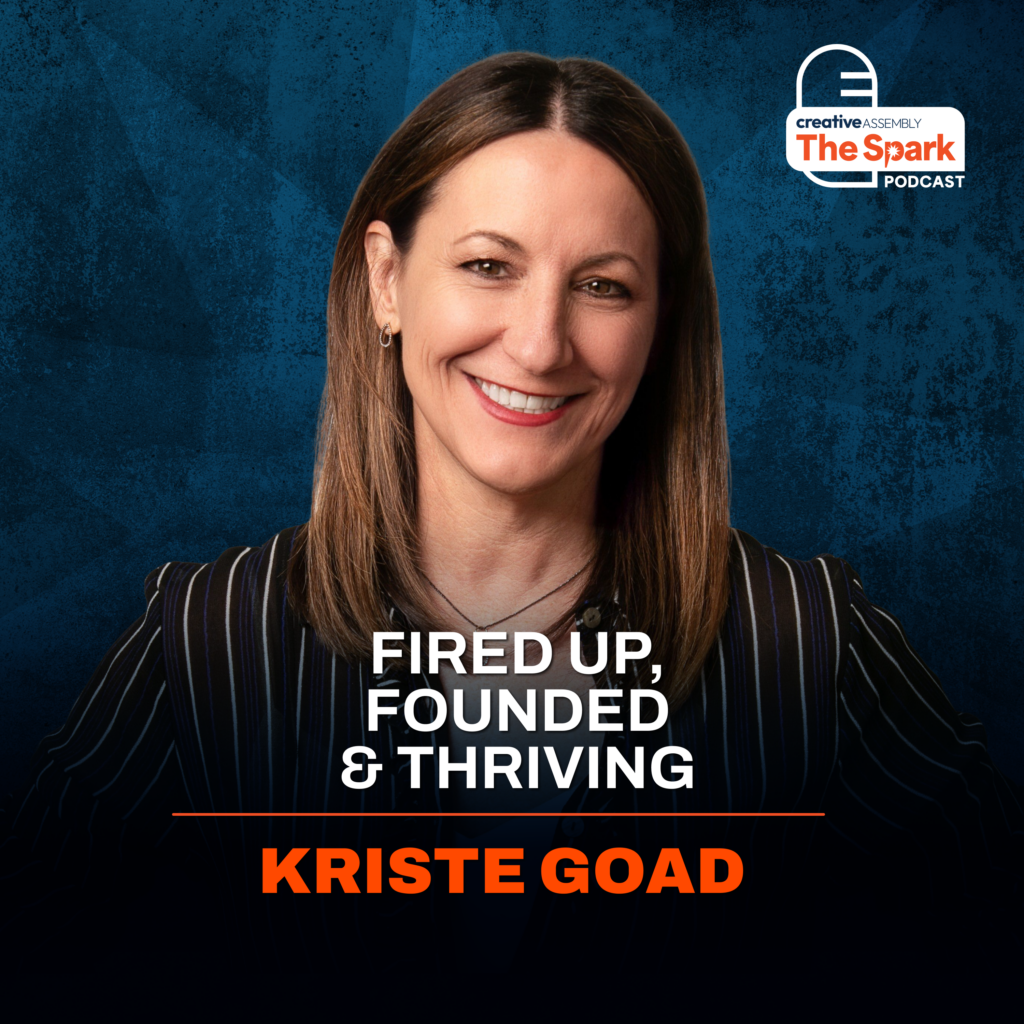
Fired Up, Founded & Thriving: Kriste Goad’s Blueprint for Building a Healthcare Marketing Agency

How to Niche Down and Scale a Marketing Agency: Ashley Robinson on Building Green Cardigan Marketing
Meet Our Guests
Never Miss an Episode. Subscribe Now
Follow Us
New episodes
We publish WEEKLY on THURSDAY at 11:00am.